Get Full Government Meeting Transcripts, Videos, & Alerts Forever!
Get email alerts on the Antisemitism On Campus topic
No spam. Unsubscribe anytime.
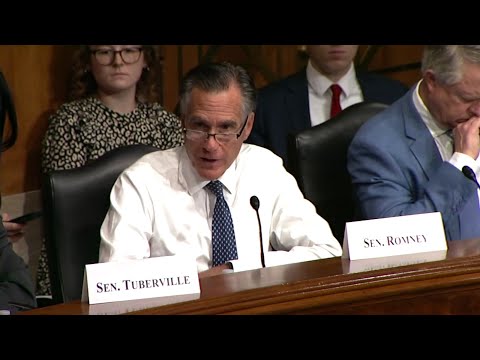
Sen. Mitt Romney presses for "moral clarity" as Stanford student describes fear after campus banners
Summary
At a Senate roundtable, Sen. Mitt Romney called recent campus antisemitism "disgusting" and urged institutions to act. A Stanford student witness said she stayed in her dorm on Oct. 7 and criticized the university's delayed, "light-handed" public response under interim president Saller.
Sen. Mitt Romney said Tuesday that recent incidents of antisemitism on U.S. campuses "make me heartsick," calling them "disgusting" and "reprehensible" and urging colleges to take firmer action.
"As I see antisemitism expressed in this country, it is disgusting. It's reprehensible," Romney said at a Senate roundtable discussion. He framed the incidents not only as moral wrongs but as geopolitical vulnerabilities, arguing that "anything they can do to weaken The United States Of America promotes their war against freedom and democracy." He urged campus leaders to oppose antisemitism "in all of its manifestations."
A student who identified herself as Steinberg described her experience at Stanford University on Oct. 7, saying she did not leave her dorm room after seeing banners across campus. "I wasn't scared, but I knew the sort of emotional weight that I would have to carry," she said, adding that friends brought her food because it was difficult to leave her room.
Steinberg criticized the university's public response. She said Stanford, currently under interim president Saller, waited several days to issue a statement and that the statement was "extraordinarily light-handed." "The answer is moral clarity," she said, "which is not what the university provided." She stressed the difference between defending academic freedom for professors and allowing student groups to operate without institutional condemnation when incidents target a community.
Romney asked for clarity on Stanford's response and expressed sympathy for Jewish students and leaders who have felt alone. He also connected campus antisemitism to broader concerns about domestic division, saying such division aids authoritarian regimes abroad.
There were no formal motions or votes recorded during this exchange. The roundtable continued after this testimony with expressions of thanks from Romney and the chairman.