Get Full Government Meeting Transcripts, Videos, & Alerts Forever!
Get email alerts on the Water Rates topic
No spam. Unsubscribe anytime.
Provo faces multiyear water shortfall; council split over how much to raise rates
Summary
Public works told the council the city may be $55M–$65M short on pipe replacement over the next decade; Whipple said staff proposed a phased rate approach (5% then larger increases) while the mayor proposed a 2.5% increase with different tier structures, prompting debate about fairness and long-term funding.
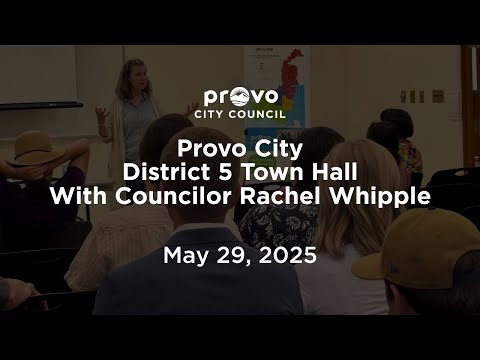
Councilor Rachel Whipple used the District 5 town hall to explain a months-long council discussion over water rates and the city’s capital needs. The Public Works presentation showed the city currently budgets approximately $6 million per year for water capital projects but faces an estimated $55–$65 million shortfall over the next 10 years to replace aging pipe.
Whipple said staff initially recommended increasing water revenue by about 15% to close the gap, but that a softer proposal—5% this year followed by larger increases in later years—was discussed after public pushback. The mayor later proposed a 2.5% increase with shallower increases in higher tiers; Whipple said she was not comfortable with a 2.5% approach because it offered no clear nine-year plan and could force steeper increases later.
There was also discussion about preserving exemptions for urban agriculture and community gardens. Whipple said a draft exemption aimed at protecting community gardens and small-scale food production was under refinement and could be integrated into a tiered-rate approach.
Whipple emphasized that tier design matters: different meter sizes drive assumptions about normal versus excessive use, and top water users (the top 10%) are likely to bear greater costs under a tiered system. She said a 5% increase now would provide more predictable multi-year planning, though not everyone on the council supported that approach.
Next steps: The water-rate question is tied into the upcoming budget vote. Whipple said council work meetings and constituent input will shape whether the council opts for the mayor’s 2.5% approach or moves toward staff’s earlier 5%–15% proposals and related conservation exemptions.