Get Full Government Meeting Transcripts, Videos, & Alerts Forever!
Get email alerts on the Bylaws Commission Forward topic
No spam. Unsubscribe anytime.
Grand County advisory board votes to forward revised bylaws to county commission
Summary
The Economic Opportunity Advisory Board voted Nov. 20 to forward revised bylaws to the county commission after state office guidance clarified that five statutory representatives should be voting members; the change also creates an operational definition for a workforce development representative to help the county qualify for rural grant funding.
The Grand County Economic Opportunity Advisory Board voted Nov. 20 to forward a redlined revision of its bylaws to the county commission, a step members said is required to align the board’s voting membership with state guidance and to clear the way for pending rural county grant requests.
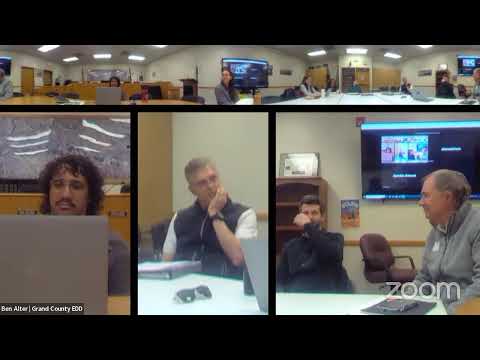
Ben Alter, economic development staff, told the board he worked with the governor’s office of economic opportunity (GoYO) and commission administration to correct “a fundamental misunderstanding of the state code that governs this board.” Alter said GoYO clarified that the statute identifies five representatives that should hold voting status; the proposed bylaws make that explicit and add an operational definition for the board’s workforce development representative so the county can recruit someone beyond a Department of Workforce Services (DWS) appointee.
Melissa Jeffers, who led a later discussion of the county’s economic framework, confirmed the change in membership will allow the board to proceed with the county’s rural grant process once the commission approves the bylaws and other administrative reviews (attorney and admin office) are complete.
Board members discussed what qualifications the workforce development representative should have. Alter said the role could be filled by someone involved in career and technical education, a human-resources or recruitment professional at a major local employer, or a business with a demonstrated workforce development strategy; Deborah McKee, GoYO outreach manager, recommended looking for HR or recruitment staff or education-focused representatives rather than defaulting to business owners when possible.
A board member moved to recommend the revised bylaws to the county commission; Forrest Rogers seconded to permit substantive discussion. After clarifying that the change addresses issues flagged in the county’s rural grant paperwork, the board voted in favor. Randy Martin explicitly said, “I vote yay,” and the chair declared the motion passed unanimously.
Next steps outlined by staff include forwarding the redline to the commission, completing attorney and administration review, and returning to the board with final membership decisions once the commission acts. The board indicated the change is intended to resolve compliance issues so the county can proceed with grant timelines in the new year.
The board did not provide a statutory citation in the meeting; staff said the statute establishing the board and the five representative roles is reproduced in the meeting packet.