Get Full Government Meeting Transcripts, Videos, & Alerts Forever!
Get email alerts on the Campus Geothermal Savings topic
No spam. Unsubscribe anytime.
University of Utah’s campus geothermal system cuts costs, water and carbon but faces high upfront costs
Summary
A University of Utah geothermal loop and 151 wells under soccer fields are reported to save the school about $70,000 a year, conserve roughly 1.8 million gallons of water and avoid 378 tons of CO2; presenters noted low operating energy but high installation costs for homeowners.
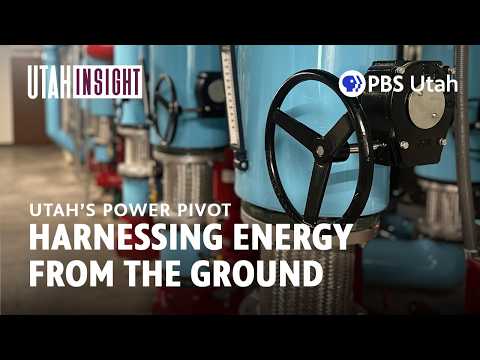
The PBS Utah segment visited the University of Utah campus to show an operating geothermal heating and cooling system that uses a closed loop and a field of wells beneath adjacent soccer fields. The program reported the system includes 151 wells and conserves energy and water while lowering campus emissions.
The host reported the campus system saves the school at least $70,000 a year in energy costs, conserves approximately 1,800,000 gallons of water annually and prevents about 378 tons of carbon dioxide from being released. An unidentified campus speaker described the system operation, saying a loop is installed and "we're not actually exchanging fluid with the groundwater," adding "so there's no ecological impact." The same speaker described running a 16-kilowatt pump for five minutes each hour in winter to heat the building.
Christiansen also reported that surplus energy produced by the system can be sent to other campus buildings; the person identified only as 'John' in the narration was cited as saying they can send extra energy to nearby buildings. The program emphasized real-world operational benefits while acknowledging the technology's limits for widespread household adoption: Christiansen said residential geothermal pump systems typically cost between $18,000 and $30,000 to install.
The segment presented the campus system as an example of geothermal applied now for heating and cooling, contrasting it with Utah Forge’s experimental deep geothermal work meant for electricity generation. The program did not provide third-party environmental assessments, long-term maintenance costs, or detailed financial payback calculations for the campus installation during the segment.
The story closed noting that although geothermal systems offer efficiency and long lifespans, high upfront costs remain a barrier to household adoption and that broader electricity-generation technologies are still under development.