Get Full Government Meeting Transcripts, Videos, & Alerts Forever!
Get email alerts on the Enhanced Geothermal Systems topic
No spam. Unsubscribe anytime.
Utah Forge reports field test showing water flowed between wells, a step toward engineered geothermal power
Summary
Utah Forge, a U.S. Department of Energy–sponsored project, reported a May 2024 field test in which water passed between two deep wells and heated enough to produce steam — a development researchers in the program say could help produce geothermal reservoirs where needed.
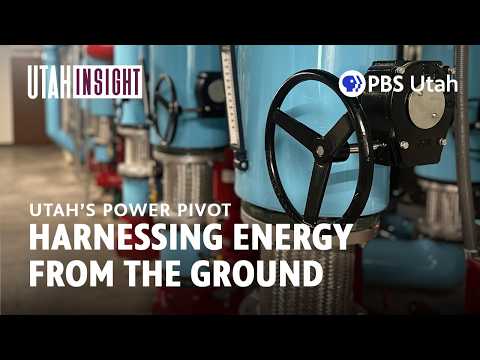
Rayanne Christiansen, host of PBS Utah's "Utah's Power Pivot," reported that the Utah Forge Project, sponsored by the U.S. Department of Energy, has taken a notable step toward engineered geothermal power. In May 2024, program narration said, testing showed water moved between two deep wells and became hot enough to produce steam, an outcome the segment described as a major breakthrough for the project.
The Utah Forge effort aims to create engineered geothermal reservoirs by drilling injection and production wells, fracturing hot rock and circulating water so it picks up heat and returns as steam to drive turbines. Christiansen described an innovation for the project: for the first time the team drilled at an angle as part of the field laboratory work near Milford in Beaver County. The episode identified Doctor Joseph Moore and his team as leading the research effort.
An unidentified expert in the program said the technique could allow reservoirs to be created "in a parking lot" or in towns and cities where conventional geothermal resources are not available. The same speaker projected an optimistic timeline, saying "in 10 years, we'll have it understood to the point where we can build these geothermal reservoirs anywhere we want." The expert also made a quantitative claim about resource scale: if 2% of the heat in rock between 2 and 4 miles depth were produced, it would amount to more than 2,000 times the energy used in the United States; that claim was presented in the program without independent verification during the segment.
The program described the basic engineered-geothermal process covered in the testing: a vertical injection well, hydraulic fracturing to open cracks in hot rock deep underground, a production well drilled thousands of feet away to collect heated fluid, and surface turbines that would be turned by the resulting steam. Utah Forge’s May 2024 test, according to the reporting, demonstrated heat transfer between wells at sufficient levels to produce steam, an outcome researchers called a substantial technical milestone.
Researchers and the segment emphasized that the technology is still under development. The unidentified expert said the project is "getting close" but that widespread deployment for utility-scale electricity still requires more work. The program did not provide further operational details such as exact depths, pressure measurements, or independent scientific review of the test results.
The Utah Forge Project is funded and conducted with involvement from the U.S. Department of Energy; the University of Utah and a field lab near Milford were also named in the segment as locations for testing and demonstration. The project’s next steps, as described in the program, are continued testing and technology development to move toward scalable systems that could produce electricity beyond current conventional geothermal sites.