Get Full Government Meeting Transcripts, Videos, & Alerts Forever!
Get email alerts on the Homelessness topic
No spam. Unsubscribe anytime.
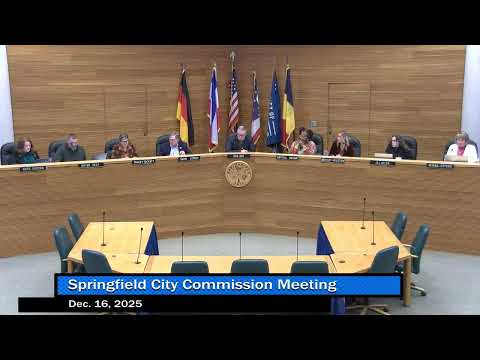
Springfield approves emergency CDBG funding for Hartley House after heated public comments on encampments
Summary
After public testimony criticizing an encampment removal as a 'secret ambush,' the Springfield City Commission approved an emergency subrecipient agreement to provide up to $65,700 in CDBG funding to Sheltered Inc. for Hartley House operations and discussed outreach and enforcement practices for encampments.
SPRINGFIELD, Ohio — The Springfield City Commission voted Dec. 23 to approve an emergency Community Development Block Grant subrecipient agreement with Sheltered Inc. to provide up to $65,700 for emergency shelter operations at Hartley House from Jan. 1 through April 1, 2026.
The decision followed a string of public comments. Ross McGregor, appearing for Sheltered Inc., thanked the commission and urged funding to keep the men’s shelter open through March, saying the agency last year placed "64 percent" of its clients into permanent housing, compared with what he called a state average of 40 percent. "Your funds that you intend to help us with will go a long way to making sure that we can keep the men's shelter, the Hartley House open," McGregor said.
Lisa Bridal, who said she had been homeless two decades ago, sharply criticized recent city action to clear an encampment and accused city leaders of a "secret ambush." "It was calloused and cowardice to say the least," Bridal said during public comment, adding that displaced people deserved dignity and a voice.
City staff and commissioners said the city balances outreach and enforcement. Logan Cobbs, the city’s community development director, said the department "gave over 30 days notice" to the individual at the encampment, offered shelter and outreach that were declined, and cited more than 10 complaints from nearby businesses and neighbors. Cobbs also raised public-health concerns, saying contractors reported encountering human waste while cleaning the site.
Mayor Rue and other commissioners emphasized the city’s efforts to work with private partners and volunteers to provide warming shelters and to protect volunteers’ safety; the mayor said the shelter is open 24 hours when temperatures are in single digits and that law enforcement and staff have provided security overtime to ensure a safe volunteer environment.
Commissioners moved the emergency resolution and adopted it by roll call. Commissioner Dr. Estrop commended staff for finding the dollars to support "some of our most in need citizens of this community." The measure was presented as an immediate, time-limited operating support to maintain shelter capacity during winter.
The commission also discussed longer-term CDBG allocations: Dr. Estrop said the city had a 2025 allocation in hand but remained uncertain about 2026 federal appropriations, adding the city is "operating pretty much blind" on next-year federal funding.
What happens next: The appropriation is an emergency, intended to ensure funds are available through March; the city said it will continue outreach and coordination with service providers to connect people to longer-term housing resources.