
Ypsilanti police report shows mixed crime trends; department cites recruitment hurdles
Get AI-powered insights, summaries, and transcripts
Subscribe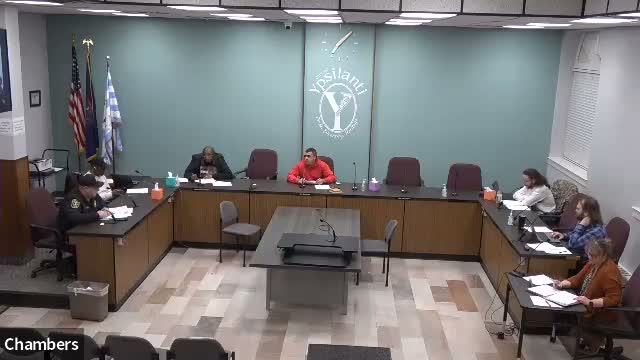
Summary
At its Dec. 18 meeting, the Ypsilanti Police Advisory Commission heard a monthly report showing declines in some offenses alongside increases in larceny and traffic crashes and was told recruitment is constrained by a roughly 50% first‑attempt failure rate on the state physical agility test.
The Ypsilanti Police Advisory Commission on Dec. 18 reviewed monthly crime statistics and recruitment updates from department leaders, who said some offenses fell while others rose and that staffing remains constrained by state testing standards.
Lieutenant (name not provided) reported category‑by‑category changes: robberies rose from 1 to 3, aggravated and non‑aggravated assaults fell (22 to 18), burglaries fell by half (6 to 3), general larceny increased (5 to 17) and traffic crashes increased from 72 to 85. The lieutenant also said hazardous traffic citations and warnings rose from 0 to 27 this month.
Commissioners asked whether increased patrol presence could explain any declines. The department called out seasonal factors and a mix of enforcement and reporting changes as likely contributors rather than a single cause.
On staffing, the chief and a lieutenant said the department has multiple candidates in background checks and hopes to send five to seven recruits to the January academy, but that applicants are being lost because they fail a state‑mandated physical agility test. The lieutenant said the state test ‘‘comprises of . . . push ups, sit ups, a vertical jump and a half mile shuttle run’’ and noted a roughly 50% failure rate on first attempts, which the department must enforce because passing is required for academy registration.
A commissioner asked whether the city can produce neighborhood‑level trend comparisons (month‑to‑month and year‑to‑year); the chief said it is technically possible but would be manual and time‑consuming. The department does not have a dedicated data analyst or a budgeted, automated system for granular neighborhood mapping.
The department also reported community outreach activities: a holiday toy giveaway at the station and an upcoming video the department filmed for release. Commissioners praised the outreach and asked the department to provide updates on initiatives such as QR code business cards mentioned in the commission’s annual reporting work.
The commission did not take policy action on crime‑data systems or recruitment at this meeting; commissioners recommended bringing any resourcing requests to the city manager and city council for further consideration.