Get Full Government Meeting Transcripts, Videos, & Alerts Forever!
Get email alerts on the Funding Cap Rfp topic
No spam. Unsubscribe anytime.
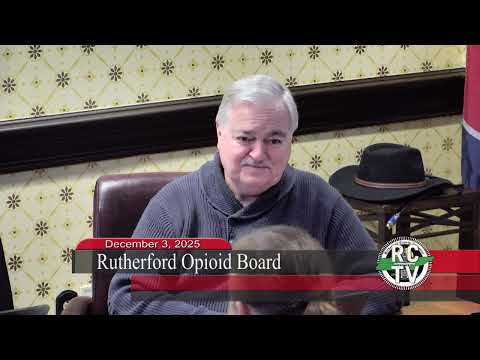
Rutherford County opioid board debates $100,000 cap and aims to publish RFP in mid-January
Summary
The Rutherford County Opioid Abatement Council weighed a proposed $100,000 per-grantee cap, discussed prioritizing treatment funding over prevention, and directed staff to publish an RFP in mid-January after members review impact data.
The Rutherford County Opioid Abatement Council spent the bulk of its meeting debating how best to allocate opioid settlement proceeds for fiscal year 2027, focusing on a proposed $100,000 cap on individual awards and an RFP timeline.
Speaker 2, a board member who led the funding presentation, told the council that treatment is more expensive than prevention and urged the board to prioritize quality over quantity: "Bottom line, we don't have 50 agencies who are qualified to do this work. Period." Speaker 2 outlined a draft funding split that would allocate roughly $332,000 to prevention and suggested $250,000–$300,000 for treatment and recovery to meet urgent needs.
The board discussed keeping a $100,000 cap to avoid overcommitment and to encourage sustainability among grantees. Speaker 1 and other members expressed concern that a strict cap could reduce the number of Rutherford County residents served by proven programs; Speaker 3 asked staff for concrete counts showing how many local clients would lose service under the cap.
Staff recommended publishing the RFP in mid-January, with the board voting on a final RFP draft at the January 7 meeting and releasing applications immediately thereafter. Speaker 2 said staff would prepare two RFP versions if needed and include a sustainability section in the application to discourage long-term reliance on the fund.
Board members asked staff to return to the next meeting with county-specific impact data (how many Rutherford County clients each applicant currently serves) and with modeled scenarios showing service reductions at different funding levels. The board did not take a final vote on the cap at this meeting; members instead agreed to review the data and revisit the decision at the next meeting.
The next procedural step is the planned RFP publication and final vote in early January; members also requested staff to circulate the draft RFP and data in advance for review.