Get Full Government Meeting Transcripts, Videos, & Alerts Forever!
Get email alerts on the Land Purchase Shelter topic
No spam. Unsubscribe anytime.
Norman council unanimously approves purchase of 3.23-acre Reed Avenue parcel for possible shelter site
Summary
The City of Norman approved an interlocal agreement to buy a 3.23-acre state parcel near Reed Avenue for $74,290, a move council and staff said preserves a key option for a permanent homeless shelter. Residents pressed for an enforceable planning framework, environmental protections for Bishop Creek and a neighborhood oversight role before temporary placement occurs.
The Norman City Council on a unanimous vote approved an interlocal agreement to purchase a 3.23-acre tract along Reed Avenue from the Oklahoma Department of Mental Health and Substance Abuse Services Real Property Trust for $74,290.
Assistant City Attorney Anthony Purinton told the council the purchase price reflected the state appraisal and that closing could occur in December; conveyance would be by quitclaim deed and would not include mineral interests. Purinton said the parcel, some of which lies in a flood plain, has been identified by staff as a promising location for a permanent shelter, a council priority.
Residents who live closest to the site said the land purchase is not neutral. Evan Taylor of the Original Town Site neighborhood urged the council to establish “clear, practical, and enforceable commitments” before any temporary or prefab placement, including a formal planning framework with milestones and a standing citizens oversight committee. Taylor said: “If the city proceeds with this purchase, we need clear, practical, and enforceable commitments.”
Other speakers were split. Some, including Dan Munson and Luigi Holboni, said the price was too good to pass up and urged the city to secure the land now; others, including Judy Moss and Jeanette Coker, asked for a neighborhood impact assessment, more information about traffic and public safety plans, and protections for Bishop Creek and its tributaries.
Planning Director Hudson described the next steps: because the parcel is unplatted the city will have a pre-development meeting, internal Development Review Team review, and Planning Commission review before any SPUD (special planned unit development) narrative is finalized. Hudson said the SPUD narrative can incorporate controls on lighting, landscaping and walls and that neighborhood input is part of pre-development and planning processes.
Jason Olson, director of Parks and Recreation, said zoning and platting are not short processes and estimated site and zoning work could take months; staff said a realistic earliest movement for a build or prefab structure could be in 2026. Scott Sturtz, director of public works, said the parcel’s size did not require a full traffic-impact study and that staff would prepare a traffic letter to guide any access or circulation changes.
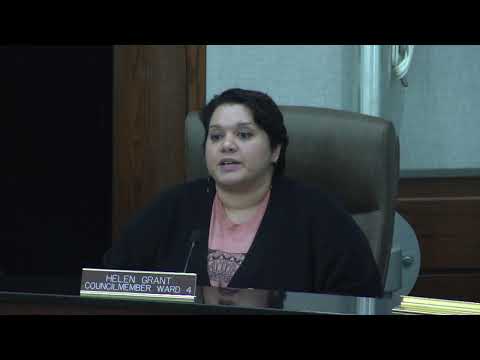
Council members said buying the land preserves options and staff time invested in negotiations with the state. Council Member Grant, who led many of the council’s questions, said neighborhood meetings and collaboration with operators such as CityCare and Food and Shelter would be avenues to shape design and operations.
The motion to approve the interlocal agreement (contract KDash2526Dash102) passed unanimously. Staff said closing would likely occur in December and that further design, zoning and neighborhood engagement will follow.
What’s next: staff will proceed with platting and pre-development steps, engage residents in pre-development meetings and include neighborhood controls in the SPUD narrative. The council and staff reiterated that purchase does not itself authorize construction or temporary placement; those actions will require subsequent planning and approvals.