Get Full Government Meeting Transcripts, Videos, & Alerts Forever!
Get email alerts on the Land Use topic
No spam. Unsubscribe anytime.
Norman council approves Western Farmers/OEC substation rezoning after heated public opposition
Summary
After extensive public comment about watershed risks, herbicide use and property impacts, the Norman City Council approved rezoning to permit a Western Farmers/Oklahoma Electric Cooperative substation near 72nd Avenue Southeast. Council passed the final reading 8–1; Councilmember Blodgett opposed.
Norman — The City Council on Dec. 9 approved an ordinance to rezone property north of Etowah Road on 72nd Avenue Southeast to allow construction of an electric substation to be owned by Western Farmers and serving Oklahoma Electric Cooperative (OEC) customers. The final reading passed 8–1, with Councilmember Blodgett voting no.
OEC system engineer Patrick Grace told the council the area’s substations have reached or exceeded nameplate capacity at peak hours and the new substation would relieve overloaded facilities, improving reliability for roughly 2,000 homes and local commercial loads. "Reliability is first, but then affordability is after that," Grace said, summarizing the utility rationale.
Western Farmers and OEC staff described the fenced equipment area as roughly 120 by 80 feet within a 300-by-400 property and said the tallest visible components would be transformer-related structures and lightning/ground rods that can reach up to about 50 feet. On noise, OEC said normal operation would be quiet and that transformer fans are regulated to remain under about 75 decibels. On vegetation management, Mark Sage of Western Farmers said the utility contracts licensed applicators and uses herbicides "authorized by the state of Oklahoma" and that applications comply with permitting.
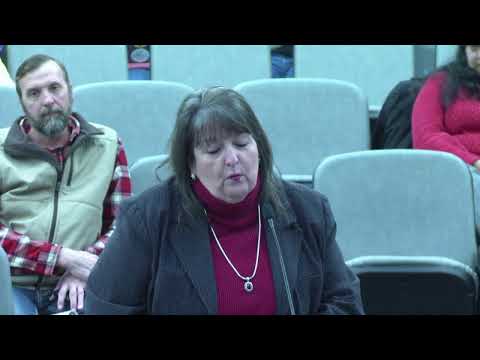
Neighbors who live within about 100–150 feet of the proposed substation told council the project threatens a water‑sensitive area feeding Thunderbird Lake and could harm property values and quality of life. "If we're gonna approve it, then we need to at least set a standard on the water," resident Trey Kirby said, arguing the landowner settled only after an eminent‑domain fight. Gary King, whose property is adjacent to the site, said he feared flooding, noise and loss of the rural character he moved there to preserve.
Several commenters asked what chemicals would be used for vegetation control; Western Farmers said they would provide a list from licensed contractors but did not name products at the hearing. Western Farmers and OEC said drainage is engineered to maintain historic flow and that there is no detention pond planned, only an oil‑water separator for transformer safety.
Council members pressed OEC about alternatives and mitigation for neighbors. Councilmember Grant noted the Planning Commission had previously reviewed the matter and asked for post‑decision outreach; Councilmember No Fire asked whether the company would remediate any problem should engineered drainage require adjustments, and OEC representatives said they would address issues.
The council record shows the rezoning came after condemnation proceedings and a monetary settlement with the landowner; OEC said the district court ruled Western Farmers could exercise eminent domain and that the parties reached a later settlement over price.
The ordinance was moved and seconded earlier in the docket (motion on record from the Feb. 25, 2025 hearing indicated initial motion by Councilmember Hinkle, second by Councilmember Grant). On final reading the measure passed with eight votes in favor and one opposed (Blodgett).
The council’s approval authorizes the zoning change and a special use limited to the substation; any other industrial development would require a separate application and public process. Council members said the decision balanced neighbors’ concerns and the utility’s need to avoid outages during extreme weather. OEC indicated the project will follow city and state stormwater and permitting standards before construction begins.
Next steps: the parties will proceed with required engineering, permitting and site work; the council did not set an independent deadline for construction commencement.