Get Full Government Meeting Transcripts, Videos, & Alerts Forever!
Get email alerts on the Water And Sewer Rates topic
No spam. Unsubscribe anytime.
Cerritos staff outline $23M in critical water, sewer projects and propose five‑year rate plan under Prop 218
Summary
City staff told the Planning Commission that aging wells, reservoirs, pipelines and pumps require $23M in critical water projects and $3.9M in sewer work; staff proposed a Prop 218‑compliant five‑year rate plan (effective Feb. 1, 2026) and a $40 bimonthly low‑income discount, with a public hearing set for Jan. 26, 2026.
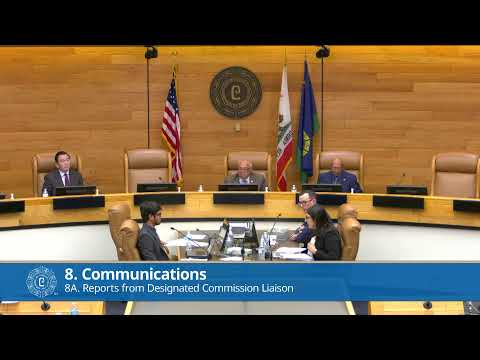
Alvin Papa, director of public works and city engineer for the City of Cerritos, told the Planning Commission on Dec. 3 that the city depends almost entirely on four groundwater wells and faces near‑term replacements and treatment needs that require significant investment. "These wells are getting aged, and they do need some help," Papa said, noting casing lifespans of six to 21 years across individual wells and elevated arsenic and manganese levels in several sites.
Staff presented the condition and priorities: a $16 million rebuild and treatment system for the city’s largest producer (Well C4) budgeted in the capital improvement program, $9–$14 million estimates for replacement of other wells, booster pump and variable‑frequency drive replacements (roughly $300,000), reservoir repairs ($50,000 identified for immediate sealing), and a recommended program to replace one mile of pipeline per year at an estimated program cost of roughly $16.7 million. Papa said the city has been buying imported water when wells are offline; he warned that imported water runs far higher than local replenishment costs and that the city recently has had to purchase import water several times per week after a casing hole at C4 caused sand intrusion.
Chris Hubert, assistant director of public works, outlined the finances and a proposed five‑year rate plan built to follow Proposition 218 procedures. Hubert said the city’s water and sewer rates have been unchanged since July 2021 and that the enterprise funds have relied on large general‑fund support, including a write‑off of roughly $24.3 million in 2023. "By the end of this fiscal year, we expect another $8,900,000 will be used to support daily water and sewer needs," Hubert said. Under a status‑quo projection, Hubert said the water fund would require about $68.9 million in general‑fund support over five years; the proposed rate plan would reduce transfers and phase general‑fund assistance out by mid‑2029.
The proposed water plan would change fixed meter charges by meter size, remove the minimum water unit so every gallon is billed, and phase in annual adjustments beginning Feb. 1, 2026. Hubert said the five‑year water CIP presented to the commission totals about $23 million (approximately $25.3 million after 4% annual inflation adjustments) after staff reduced an earlier $43 million project list to essential items.
Hubert also described a proposed low‑income assistance program modeled on the SCE CARE program: rather than a percentage discount, staff proposed a fixed $40 bimonthly credit for income‑qualified households; staff estimated about 2,300 Cerritos households could qualify for budgeting purposes and said they will return to the City Council with detailed program rules at a public hearing scheduled for Jan. 26, 2026.
Papa and Hubert stressed that many projects are currently unfunded and that routine best practices—well rehabs every 10 years and sewer CCTV inspection every five years—are not fully programmed. Papa said some required work already appears in the CIP (C4 priority) while other items (cathodic protection, meter automation, lateral replacements) are on an unfunded list.
Commissioners pressed staff on distinctions between daily operations and major capital, requests for historical revenue/expenditure data, and financing alternatives such as bonds. Staff said the current rates cover minimal operations but not full best‑management practices and that bond financing would add long‑term debt and not produce a sustainable operating model for the utility.
Public comment included Deborah Berry, a long‑time resident who said she supports investing now to avoid future emergencies: "I don't want to pay more for our water bill, but I sure as heck do not want unsafe water," she said. A resident identifying himself as Robert strongly opposed the proposal, citing the mailed notice and sample rate tables and asserting the example bills in the mailed materials showed large increases for a typical household.
Hubert told the commission that Prop 218 notices were mailed to property owners and customers on Nov. 13, 2025 and included the amount of the proposed rate changes, the calculation method, instructions for submitting a written protest and the date/time of the hearing. The notice deadline for mailed or in‑person written protests is 5 p.m. on Monday, Jan. 26, 2026, or protests received before the end of the public hearing on that date.
No rate change was adopted at the Planning Commission meeting. The staff presentation and the record established the need for the projects and set the public process: staff will return with final proposals and supporting materials at the Prop 218 public hearing before the City Council on Jan. 26, 2026.