Get Full Government Meeting Transcripts, Videos, & Alerts Forever!
Get email alerts on the Water And Sewer Rates topic
No spam. Unsubscribe anytime.
Cerritos staff propose new five‑year water and sewer rate plan; public hearing set for Jan. 26, 2026
Summary
City staff proposed a five‑year rate plan intended to make the water and sewer funds self‑sustaining by mid‑2029, outlined capital projects including a $16 million C4 well, and proposed a low‑income assistance option; a public hearing under Proposition 218 is scheduled for Jan. 26, 2026.
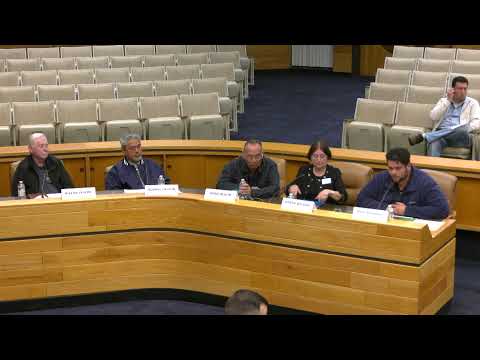
Cerritos city staff presented a proposed five‑year water and sewer rate plan on Nov. 19 that they say will phase out general‑fund transfers and make the utilities self‑sustaining by July 1, 2029. Assistant Director of Public Works Chris Kubert told the Community Safety Committee the city has not raised rates since July 2021 and that earlier increases did not pay for major system upgrades.
Kubert said the utilities have relied on the general fund to cover operating costs; staff reported a 2023 write‑off of $24,300,000 in general fund loans to the water and sewer funds and estimated an additional $8,900,000 of general‑fund support will be needed before changes take effect. To reduce that dependence, the city hired Water Resources Economics to conduct a rate study and narrowed an initial $43 million project list to focus on critical work. "The system needs a new rate structure that builds financial strength and keeps the system reliable," Kubert said.
Among the capital priorities is the C4 well and treatment system, which staff estimated at $16,000,000. After accounting for 4% annual inflation, the five‑year water capital program was described as roughly $23,000,000 (or $25.3 million with inflation); staff said the initial, larger program was reduced to minimize customer impacts. Under a status‑quo scenario staff said the water fund would require about $68,900,000 in general‑fund transfers over five years; the proposed plan would reduce that total to roughly $9,500,000 and phase out transfers by mid‑2029.
Kubert said the proposed rate design updates fixed meter charges by meter size using American Water Works Association guidance, eliminates a minimum water unit so every gallon is billed based on use, and would implement annual adjustments beginning February 2026 if adopted. On the sewer side, staff described a roughly $3.9 million five‑year capital program (about $4.3 million after inflation) including $1.2 million for CCTV inspection and $2.4 million for pipe replacement; the proposed sewer plan phases general‑fund support out over five years, limiting transfers to about $3.6 million.
Staff also described a draft low‑income assistance program modeled on utility discount programs. Kubert said staff considered a CARE‑style percentage discount but are proposing a fixed $40 bimonthly credit to stabilize program costs. "As of Oct. 25, over 2,200 Cerritos households are enrolled in CARE, and staff estimates about 2,300 households could qualify for budgeting purposes," he said, adding staff will return with a refined program if council chooses to proceed.
Under Proposition 218 procedures, staff mailed notices to property owners and utility customers on Nov. 13; the notice included the amount and calculation of proposed rate changes, instructions for submitting written protests, and the Jan. 26, 2026 public hearing date. Staff said written protests must be mailed or submitted to the city clerk by 5 p.m. on Monday, Jan. 26, or received before the hearing ends on Jan. 26, 2026.
Members of the public raised objections to the scale of sample bill impacts. A speaker cited a sample residential bimonthly bill increasing from $37.61 to $81.59 and asked why commercial rates appear to rise less. Kubert responded during the presentation that staff focused on essential projects to limit rate impacts and compared proposed bills with nearby agencies to show relative affordability.
The committee did not vote on rate changes at the Nov. 19 meeting; staff will present the formal ordinance and an updated assistance program at the public hearing on Jan. 26, 2026, when the council may adopt the rates under Proposition 218 procedures.