Get Full Government Meeting Transcripts, Videos, & Alerts Forever!
Get email alerts on the Municipal Budget topic
No spam. Unsubscribe anytime.
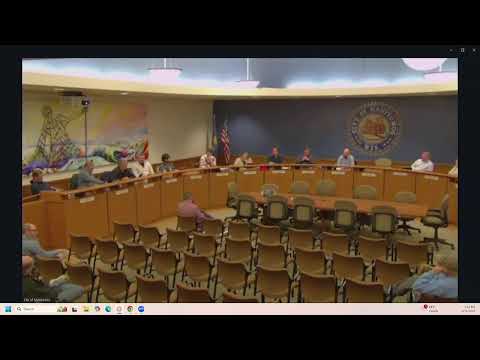
Manitowoc council adopts $20.27 million 2026 budget, approves levy 9–1
Summary
The Manitowoc City Council approved a $20,274,209 budget for 2026, including $1,469,971 in proposed tax incremental financing, by a 9–1 vote; Alderman Reickelberg cast the lone dissent, citing low undesignated fund balance and reliance on reserves.
The Manitowoc City Council voted to adopt the finance committee's recommended 2026 budget and levy on a 9–1 roll call after a special meeting and a public hearing that produced no public testimony.
Alderman Sikowitz, chairing budget discussion, moved adoption after the clerk read the finance committee report and the key totals: a proposed 2026 general city budget/2025 levy for 2026 of $20,274,209 and $1,469,971 in proposed tax incremental financing. “I want to thank Sean Elford, our finance director, his staff, Eric Biedman, and rest of the staff in the finance department for their compiling the budget this year,” Sikowitz said, urging colleagues to view the budget as a largely carryover plan that preserves city services while reflecting negotiated personnel costs.
Sikowitz and other supporters identified personnel-related cost drivers: a police union agreement that he said will raise city costs by $359,000 in 2026; adjustments to address pay compression in protective services (about $199,000); a firefighter collective bargaining agreement (about $199,000); and a proposed 13% increase in the benefit plan for non‑represented employees (about $365,000).
Alderman Reickelberg announced he would vote no, saying the budget relies on a substantial application of fund balance and raises borrowing. Citing the full reassessment and the assessment analytics report, he said average residential values rose sharply this year and presented estimated taxpayer impacts: using the reported average assessment change, he calculated an average overall tax increase of roughly 8.31% (about $275.45 annually, or roughly $23 per month) for the average property. He warned the proposed budget increases outstanding general obligation debt by $616,193 in 2026 and uses $3.5 million of general fund balance, leaving an undesignated fund balance projected at about $18,805 — far below commonly recommended reserve levels. “So that's why I will not be voting for the budget,” Reickelberg said.
Other aldermen pressed for clearer lists of outlay items and discussed whether certain capital borrowings could be split or delayed; Reickelberg said a planned compromise to borrow only part of a fire equipment purchase was precluded after the fire chief indicated full-year funding would be required on the delivery schedule. Alderman Schley and other members said they had heard little public demand to cut services and praised staff transparency and the finance committee's work.
On the vote, the presiding officer called those in favor; the motion carried 9–1 with Alderman Reickelberg recorded as the lone dissenter. The council said it expects tax bills to go out after other taxing entities finalize figures, likely in mid‑December.
The finance committee report and the budget document were forwarded for implementation steps; no amendments or substitutions were adopted during the meeting. The council adjourned following the vote.