
Toledo City School Board unanimously adopts resolutions opposing four Ohio bills on K–12 instruction and school chaplains
Get AI-powered insights, summaries, and transcripts
Sign Up Free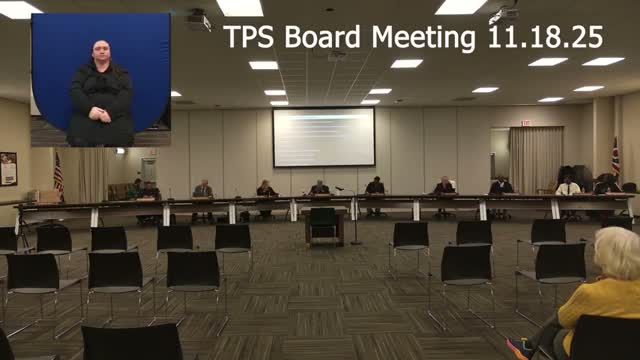
Summary
The Board of Education of the Toledo City School District on Nov. 18 adopted four unanimous resolutions opposing several Ohio bills described at the meeting as requiring specific instructional content, singling out Christianity in history instruction, allowing volunteer school chaplains, and mandating display of designated historical documents; members raised legal and opt‑out concerns and urged policy and legal review.
The Board of Education of the Toledo City School District on Nov. 18 unanimously adopted four resolutions opposing recent Ohio bills that board members said would interfere with local curricular control and risk injecting religious doctrine into public schools.
At a packed regular meeting, board members discussed and approved resolutions described in the transcript as opposing “House Bill 485” (a bill the board said would mandate human growth and development instruction and require showing a video called “Meet Baby Olivia”), “House Bill 486” (referred to in the meeting as the Charlie Kirk American Heritage Act, which the board said risks privileging Christianity in history instruction), “House Bill 531” (the school chaplain act, described as permitting volunteer chaplains to serve alongside school counselors), and a proposal identified as Bill 34 requiring display of designated historical documents including the Ten Commandments. Each resolution was read into the record, discussed, then approved by roll call.
Board members voiced similar concerns across the four items: lack of opt‑out language for sensitive materials, the potential for mandated content to be ideologically driven rather than evidence‑based, and the constitutional risk of government promotion of a particular religion. “It’s just never in vain this assault on public education,” one member said during the HB 485 discussion, calling the video cited in the bill “faith driven and scientifically inaccurate.” Another member said the proposed history instruction “risks favoring one religious perspective over others” and could undermine religious neutrality in public schools.
Members also focused on practical safeguards. During debate on the bill described as HB 485, a board member asked legal and policy staff to examine whether the district could extend opt‑out provisions locally. The board’s policy chair said the suggestion would be taken up with legal counsel and the policy committee.
Speakers raised operational concerns about the chaplain proposal, asking who would handle background checks and whether volunteer chaplains would have the training school counselors receive. “There’s no guidelines to protecting our district, our students, from someone who wants to come in and do harm,” one board member said during discussion of the chaplain legislation.
The board recorded roll call votes for the resolutions; the members present voted in favor on each item. The meeting transcript records the roll calls and affirmative votes by the members who answered during the calls (for example: Mister Vasquez — Yes; Miss Barnes — Yes; Mister Parker — Yes; other members recorded as Yes). No member is recorded as voting against or abstaining in the transcript.
The board’s resolutions reference legal concerns, including the U.S. Supreme Court’s precedents on the Establishment Clause; during discussion of the display requirement, members cited the court case referenced in the transcript (spoken as “Stowell v. Graham 1980”). After adoption, members said they planned to continue tracking more than 200 state bills that board members said could affect local education policy.
Next steps announced at the meeting included referral of opt‑out and policy questions to legal counsel and the policy committee. The board did not adopt local policy changes during the Nov. 18 meeting; members said further review would follow.
The meeting adjourned after superintendent and board updates.