Get Full Government Meeting Transcripts, Videos, & Alerts Forever!
Get email alerts on the Assistive Technology topic
No spam. Unsubscribe anytime.
Presenters say assistive technology gives students access, not advantage
Summary
Presenters defined assistive technology under IDEA and described tools — from AAC devices to eye-gaze systems — that staff say help students communicate, reduce frustration, and increase classroom participation.
Speaker 1 discussed how assistive technology (AT) helps people 'organize and function' and framed everyday tools — glasses, hearing aids, closed captioning, calendars and smartphones — as forms of AT that give users access rather than an unfair advantage.
Speaker 2 cited the Individuals with Disabilities Education Act (IDEA), saying the law defines assistive technology as any item, piece of equipment, or product system, commercial or customized, used to increase, maintain, or improve the functional capabilities of a child with a disability.
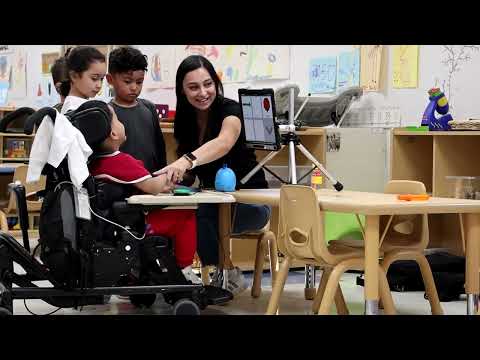
Presenters described classroom examples: speech-generating devices that allow nonverbal students to speak, adaptive keyboards and mice for students with limited mobility, screen readers, pencil grips and dynamic display systems that provide broad vocabulary access. "Access to AAC is life changing for my students," Speaker 1 said. Speaker 3 described a student named Noah for whom speaking is difficult and said AAC 'gives them a voice' and enables participation and social interaction.
Staff emphasized that behavior often signals unmet communication needs: speakers said that when students can communicate through technology, frustration and behavior tied to communication decline. Speaker 4 said staff are empowered to match devices and strategies to individual students, and a family reported lessened frustration at home after a student received a communication system.
Presenters argued many assistive tools become universal technology: a switch, adaptive mouse or eye-gaze access can open the curriculum for students with mobility or speech limitations and make instruction more inclusive for all learners.
The presentation did not include formal votes or policy action. Presenters relied on classroom examples and family reports to illustrate the practical effects of assistive technology; a brief unrelated line in the transcript was flagged as a probable transcription artifact and was not used in this article.