Get Full Government Meeting Transcripts, Videos, & Alerts Forever!
Get email alerts on the Workforce Development topic
No spam. Unsubscribe anytime.
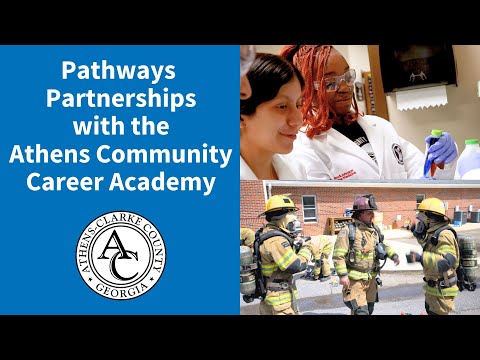
Athens Community Career Academy and Athens‑Clarke County partner to train students for biomanufacturing and firefighting careers
Summary
The Athens Community Career Academy described a partnership with the Athens‑Clarke County government creating biomanufacturing and firefighting pathways. Academy leaders and students said the three‑semester programs and employer instructors aim to build a local pipeline to well‑paying jobs.
Wesley Molina, CEO of the Athens Community Career Academy, told attendees the academy has launched pathways in partnership with the Athens‑Clarke County government to give high‑school students hands‑on training for local careers. "Currently, we're offering 13 different pathways," Molina said, and described a pathway as a three‑semester course sequence designed to prepare students for work in a specific career field.
The program highlights two new pathways developed through the county partnership: biomanufacturing and firefighting. Molina said the partnership is intended to leverage county connections to local employers so students can move from classroom training into local jobs.
Speakers emphasized local industry demand as the rationale for the effort. One presenter described Athens area employers as large companies seeking qualified young workers, and framed the academy as a response to that demand. "They're clamoring for qualified, sharp, young folks to get into this sector," an unidentified presenter said.
A student enrolled in the program said the pathway has been a meaningful learning experience. "I've learned stuff I never would have learned anywhere else," the student said, adding they began the pathway in the first semester of their sophomore year and found the courses and peers helpful.
Staff and presenters also underscored the role of employer instructors. One speaker said the best way to expose students to career training is to have subject‑matter experts — for example, firefighters teaching firefighting skills or pharmaceutical staff teaching bioscience techniques — rather than general classroom instruction.
Participants described the pathway as a model for collaboration among industry, local government, school systems and state agencies to increase access to career training and to support local innovation and sustainable livelihoods. Speakers did not record any formal vote or policy decision during the presentation; details on funding, enrollment caps and long‑term placement outcomes were not specified in the remarks.
The academy currently lists 13 pathways, each intended as a three‑semester sequence, and officials said the county partnership has produced direct pathways toward biomanufacturing and firefighting roles.