
Community advisory committee recommends $255 million bond priorities for SCUC ISD
Get AI-powered insights, summaries, and transcripts
Subscribe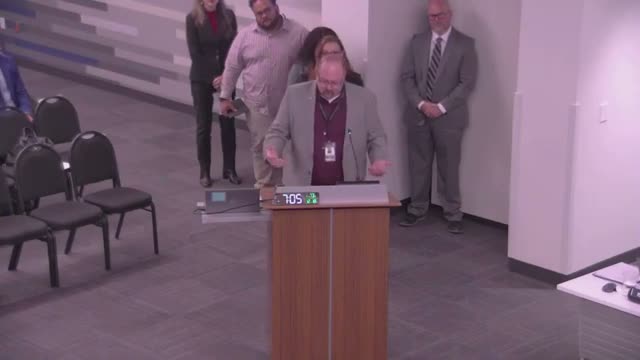
Summary
A district community advisory committee presented prioritized facility and program needs totaling roughly $255 million—part of nearly $750 million identified—within the district's $295 million bond capacity, emphasizing safety, aging infrastructure, instructional spaces, transportation, fine arts, CTE and athletics.
The Schertz‑Cibolo‑Universal City Independent School District on Monday received a set of facility and program priorities from its Community Advisory Committee (CAC) aimed at guiding long‑range planning and a potential bond election.
CAC members said they reviewed nearly 50 projects with total need estimates approaching $750,000,000 and narrowed that list to fit a $295,000,000 bond capacity. The group’s recommended priorities came in at about $255,000,000 and focus on safety and security upgrades, aging facilities and infrastructure, improved learning environments, transportation, student programs, fine arts, career and technical education (CTE) and athletics.
Justin Archbold, who opened the presentation, said nearly 80 community members participated in tours, research and deliberations to ensure recommendations reflect a broad range of perspectives. Carla Barnes and other CAC members highlighted findings from campus visits: unsecured lobbies at Marion Dollford, end‑of‑life mechanical systems at Dobie, and instructional programming in spaces not designed for their current use at Wilder.
Maggie Titterington, a founding CAC member, told trustees the committee aimed to be comprehensive and deliberate: "We were careful to prioritize critical infrastructure needs while supporting many of our district's core services and programs," she said, adding that the committee sought to present a plan that could be phased as part of longer‑term planning.
Board members praised the committee’s process and agreed the board would use the recommendations as the starting point for next steps. Superintendent Maloney and staff said the board will review the CAC’s priorities in the coming months and that some projects not included in the May 2026 package would be planned for later phases.
The CAC presentation does not itself authorize spending. The board will consider the recommended priorities and associated financial modeling in upcoming workshops and take action if it places a bond proposition before voters.