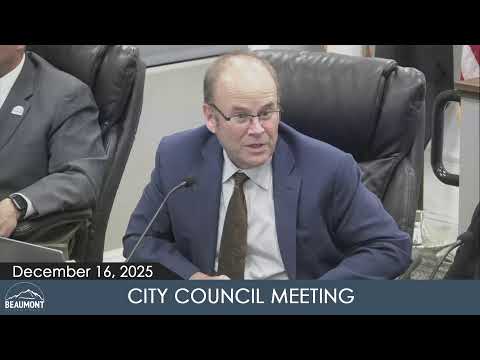
Beaumont council approves formation of three CFDs to finance Fairway Canyon 4C infrastructure
Loading...
Summary
The City Council authorized formation of three Community Facilities Districts for the Fairway Canyon 4C development, certified landowner election results and introduced ordinances to authorize special taxes; the actions were approved by roll call votes and call for future landowner elections and potential bond issuance.
The Beaumont City Council on Dec. 16 approved formation of three Community Facilities Districts (CFDs) tied to the Fairway Canyon 4C housing project, advancing the developer's request for local financing mechanisms under the Mello‑Roos Community Facilities Act.
City staff told the council the three proposed districts would separately finance public improvements, public safety services and long‑term maintenance. The facilities district (CFD 2025‑1) carries a maximum bond authorization of $4 million to fund roadway and sewer infrastructure; the public services district (CFD 2025‑S) sets maximum special tax rates described in staff materials (examples: up to $639 per single‑family unit); and the maintenance district (CFD 2025‑M) covers parks, landscaping, lighting, pavement management, storm drains and graffiti abatement, including a contingency backup tax if a homeowners association fails to perform.
Shane Spicer of Spicer Consulting explained the request is consistent with an existing 2003 development agreement that obligates the city to cooperate in forming financing mechanisms for required infrastructure. He said the districts include the Fairway Canyon 4C project area and future annexation areas and that landowner elections were required because no registered voters live within the proposed boundaries.
After a public hearing and confirmation from the city clerk that no written protests were filed, council members adopted resolutions forming each CFD, determined necessity to incur bonded indebtedness where required, certified landowner election results and introduced ordinances authorizing the levy of special taxes for each district. The deputy city clerk announced the landowner elections had been held at the meeting and that each ballot proposition passed by more than two‑thirds of the votes cast.
Council discussion clarified that the council was not issuing bonds immediately, that the $4 million for facilities is an authorization cap, and that special taxes would escalate annually at the greater of CPI or an established percentage depending on the district. Council members asked about timing, bond terms and the contingency structure for maintenance tax if an HOA fails to maintain improvements.
The council adopted the resolutions and introduced the ordinances in separate motions and recorded roll calls in favor of the actions. Staff will proceed with the election certification and required follow‑up steps in compliance with state law.
What happens next: the formation resolutions call for the landowner elections and, if ballots remain in favor, ordinances will be brought forward for final adoption and any future bond issuance would require further council action and compliance with legal requirements.