
Wagoner council considers $1.4 million loan or CD liquidation to support community hospital amid urgent public pleas
Get AI-powered insights, summaries, and transcripts
Subscribe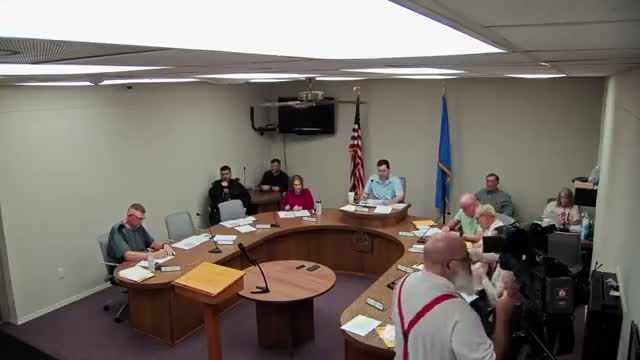
Summary
City council debated a resolution to authorize up to $1.4 million in lending support for Wagner Community Hospital, heard multiple staff and resident pleas about emergency access and local jobs, and initiated a roll call vote; the transcript does not record a final, explicit tally for the resolution.
WAGONER, Okla. — The Wagoner City Council opened a special meeting Dec. 23 to consider a resolution that would permit the Wagner Hospital Authority to borrow — or, if a bank loan is not available, allow the city to sub-loan up to $1.4 million and liquidate a certificate of deposit as collateral.
At the start of the meeting the presiding official said the first option would require seven yes votes and that the second option would need six, and then opened the floor to public comment.
Residents, hospital employees and clinicians urged the council to approve immediate support. "You can't wait 30, 40 minutes to drive to another town" in a true emergency, said Megan Muellenweg, a lifetime Wagner resident, describing personal medical crises and saying the hospital’s emergency services are essential to the community. Nursing staff, technicians and other employees described the hospital as a major local employer and urged approval to avoid job losses and economic fallout.
Crocey Barney, a Blue Sky Bank representative, described the mechanics of a CD-secured loan and the tradeoffs if the city cashes a certificate of deposit: the CD currently earns roughly $5,000 a month in interest (reported CD rate 4.15%), while the bank's current rates are about 3.5 percent. "Doing a CD loan allows the hospital to build performance with Blue Sky Bank," Barney said, adding that if financial performance improves the CD might not need to be held as collateral.
Hospital representatives explained how they would use a line of credit. Jimmy (identified in public comment earlier as Jimmy Leppard) told the council that quarterly Medicaid supplemental payments total about $1.7 million, and the hospital's plan is to draw on a line of credit during a quarter and repay it when the supplemental payments arrive. "We draw down on that as we need to during each quarter, and then each quarter pay that back down to 0," Jimmy said, describing the approach as short-term cash-flow management rather than long-term debt accumulation.
Councilors asked about timing, vendor obligations and whether cashing the CD could be reversed later; Crocey Barney said it is technically possible but that repurchasing a CD might not match the same interest rate. Staff and speakers provided staffing and economic data: April Watkins (LPN) said Wagner Community Hospital has 238 employees, 104 who live in Wagoner (74 in the city, 30 in the county), and warned that closures would have ripple effects on local spending and jobs.
After public comment, a council member moved to adopt the resolution authorizing issuance of a promissory note by the hospital authority up to $1,400,000 and, if necessary, a city-funded sub-loan and liquidation of the CD to fund it; another council member seconded. During the roll call that followed the clerk recorded Butler (yes), Hagenbottom (yes), Hamilton (yes), Wagner (yes) and Wilson (no). The transcript captures an extended and heated exchange after Wilson's vote; it does not include a clear, final roll-call tally or an explicit statement of the motion's final disposition.
The meeting closed with a motion to adjourn. The clerk called the roll for adjournment and the meeting was adjourned at 7:08 p.m.
Why it matters: Wagner Community Hospital is presented in testimony as the town’s primary emergency-care provider and a major employer. If the council approves short-term borrowing or a city sub-loan, hospital leaders say they will use quarterly Medicaid supplemental payments to repay short-term draws; opponents in the room questioned the financials and asked for clearer long-term plans. The record reflects strong community support for keeping services in place and concern about near-term cash-flow disruptions.
Next steps: The transcript does not contain a definitive, documented final result of the resolution vote; any published report should confirm the official minute or subsequent city communication for the final tally and any required follow-up details.