Perris Planning Commission Recommends Certification of Harvest Landing EIR, Limits Warehouses and Narrows Parcel‑Hub Footprint
Loading...
Summary
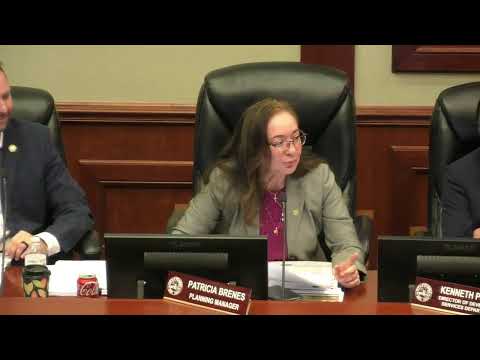
After hours of testimony, the Perris Planning Commission voted 3–1 on Dec. 17 to recommend certification of the Harvest Landing Final Environmental Impact Report and adoption of a Specific Plan amendment for staff‑preferred Alternative 4, with conditions that remove broad warehouse allowances and tighten the definition and footprint of the proposed parcel hub.
The Perris Planning Commission voted 3–1 on Dec. 17 to recommend that the City Council certify the Final Environmental Impact Report (EIR) and approve a comprehensive amendment to the Harvest Landing Specific Plan, selecting staff‑recommended Alternative 4 with a set of conditions and clarifications.
The landowner and applicant, HIP Southern California Properties LLC (Howard Industrial Partners), is proposing a two‑phase project that would reconfigure the existing Harvest Landing Specific Plan to include a roughly 46.49‑acre regional commercial shopping center, a parcel‑hub sorting facility of about 391,725 square feet (reduced by commission amendment to the project’s originally proposed footprint in this hearing), and Phase 2 reserved for multiple‑business use and up to 615 residential dwelling units. The project package before the commission included multiple entitlements: a General Plan amendment, a specific‑plan amendment, zone change, development agreement amendment, several tentative parcel maps, conditional use permits and development plan reviews.
Why the commission acted
Staff and the applicant told commissioners that the applicant now supports Alternative 4, which removes allowances for industrial warehouses and distribution centers while retaining the commercial center, a parcel hub (for last‑mile delivery), and the potential for up to 615 housing units north of Orange Avenue in Phase 2. Staff’s environmental analysis found that the project would have significant and unavoidable impacts in four areas—regional air quality, greenhouse gases, noise for one roadway segment, and vehicle miles traveled (VMT) from commercial uses—and therefore the city would, if it certifies the EIR, need to adopt a statement of overriding considerations along with a mitigation monitoring and reporting program.
Supporters and opponents
The hearing drew hundreds of residents and organized groups. Supporters — including representatives from local labor unions, the Paris Valley Chamber of Commerce and retail partners — spoke in favor of the commercial center, sports park and the job opportunities the applicant projected. Tim Howard, representing the applicant, told the commission: “We have petitions both online and paper, and we’ve turned those in…. Harvest Landing delivers on both of those fronts,” and described commitments to public art, parks and a jobs fair.
Opponents — including neighborhood groups and environmental justice organizations — urged commissioners to slow the process, urged recirculation of the EIR for public review, and said the “parcel hub” is operationally similar to a warehouse. Anna Carlos, speaking for a Bloomington‑area group, told the commission: “It’s not a parcel, it’s just a warehouse under a different name,” and called for binding, enforceable guarantees for the community benefits discussed at the podium.
Key technical points and commitments
- Parcel hub vs. warehouse: Applicant and its consultants said the proposed parcel hub is a last‑mile sorting facility (ITE land‑use code 156) whose trips and vehicle mix are different from high‑cube fulfillment warehouses. Traffic consultants estimated about 186 truck trips per day associated with the parcel hub (about 29 trucks in the AM peak hour and 19 in the PM peak), generated mainly by smaller 2‑ to 4‑axle vehicles and vans, and argued that a parcel hub typically generates a higher share of passenger‑vehicle trips and a lower percentage of heavy‑truck trips than warehouse uses.
- Water and utilities: Eastern Municipal Water District told the commission it has identified two well sites that would each produce approximately 1,300 acre‑feet of water and described planned recycled‑water use for landscape irrigation on site.
- Community benefits: The development agreement presented to the commission included a suite of community benefits the applicant described on the record: commitments for public art ($2.5 million), a 13‑acre water‑quality management area that would include trails and landscaping, a proposed sports park (about 16 acres), job‑fair coordination, and applicant‑estimated economic figures (the applicant cited roughly 6,000 construction jobs over build‑out and 5,000 permanent jobs across phases and $90 million in infrastructure investment). Commissioners conditioned several of the public‑benefit promises into the recommendation.
School relocation and sensitive receptors
A recurring concern at the hearing was Val Verde Elementary School, which sits within the proposed Phase 2 area. Derek Owen, assistant superintendent for Val Verde Unified School District, told the commission the district has been engaged in discussions and that a potential relocation site (about 20 acres) has been vetted by the district. Commissioners pressed for enforceable language that would require replacement school facilities and agreed to add conditions and development‑agreement language that would require the district’s replacement school infrastructure and certain off‑site improvements to be completed and in service before certain project milestones are reached.
Commission action and conditions
Vice Chair Shively moved to recommend certification of the Final EIR and adoption of the Specific Plan amendment for Alternative 4, with multiple staff‑proposed corrections and more than a dozen commissioner‑requested edits and conditions. The motion was seconded and passed on a 3–1 vote: Commissioner Lopez voted no; Commissioners Jimenez and Shively and Chair Hammond voted yes (one commissioner had recused earlier in the hearing). Among the key additions the commission requested or accepted as amendments were:
- Limit and clarify the parcel‑hub definition: commissioners directed staff to incorporate a precise description of the parcel hub consistent with transportation practice (referencing ITE land‑use code 156 / last‑mile sorting facilities) and to list the typical carrier types (FedEx, UPS, USPS) and operational limits in the specific plan and development agreement so it is not used as a generic industrial warehouse designation in the future.
- Footprint adjustment: commissioners accepted a friendly amendment to reduce the parcel‑hub footprint toward the earlier, smaller proposal (documented in hearing materials) and asked that the resolution and conditions correct square‑foot and acreage figures to match the selected alternative (approx. 322,079 sq ft and ~59.37 acres for the parcel‑hub area as reflected in the motion amendment).
- No future warehouses: the commission’s recommendation and the draft specific‑plan language were revised to remove broad allowances for high‑cube warehouses and distribution centers from the MBU (multiple business use) designation; the commission also asked that a maximum of one parcel hub be permitted in the MBU area unless the project returns with a new environmental analysis.
- School replacement timing: commissioners asked that the development agreement require that any replacement school site and associated off‑site improvements (as agreed with the school district and EMWD for water service) be delivered and move‑in ready before certain Phase‑2 entitlements can be exercised.
Next steps
The commission’s vote is a recommendation to the Perris City Council. The staff packet and the commission’s recommended resolutions (including draft findings, mitigations and a mitigation monitoring and reporting program) will go to the City Council for final action. Staff and commissioners repeatedly noted that the project would require the council to adopt a statement of overriding considerations because of the identified unavoidable environmental effects.
Quotes (representative)
- Tim Howard (applicant): “We embrace that move by council and have withdrawn any kind of warehouse facility from Harvest Landing…. We have petitions both online and paper, and we’ve turned those in. Harvest Landing delivers on both of those fronts.”
- Opponent Anna Carlos: “It’s not a parcel, it’s just a warehouse under a different name.”
- Val Verde USD (Derek Owen): “The school, where it is currently located would not be ideal, if the plan was approved as is… the district is prepared to engage and find an alternative place for those students.”
What to watch for
- City Council review and final vote on certification of the Final EIR and the specific‑plan amendment. The Council will receive the commission’s recommendation, the final EIR and the recommended conditions and can accept, modify or reject that recommendation.
- Final development‑agreement language and the timing and enforceability of community‑benefit commitments, school relocation requirements and the parcel‑hub restrictions that the commission requested.
- Any legal challenges or requests for recirculation of the EIR from groups that argued the revised Alternative 4 was not fully disclosed earlier; staff’s written finding is that recirculation is not required because the changes reduce environmental impacts compared with the draft EIR scenario.
The commission’s action marks a significant step in a multi‑year effort to repurpose the Harvest Landing area, balancing retail, park and housing elements against environmental, traffic and community health concerns. The matter now moves to the Perris City Council for final consideration.