Get Full Government Meeting Transcripts, Videos, & Alerts Forever!
Get email alerts on the Budget topic
No spam. Unsubscribe anytime.
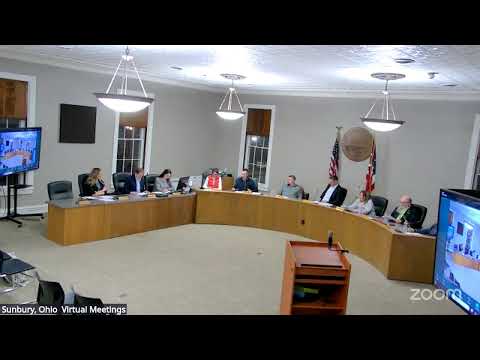
Sunbury finance committee reviews 2026 budget, flags capital transfers and modest income-tax shortfall
Summary
The finance committee reviewed the consolidated 2026 budget ahead of a council vote, noting $8.5 million in anticipated general fund revenues, just-over $10 million in appropriations, a $1.3 million transfer to capital projects and an expected income-tax shortfall of about $165,000 relative to the income-tax target.
The Sunbury City Finance Committee on Dec. 17 reviewed the city's proposed 2026 budget and related financial reports ahead of the council's expected vote later that night. Finance Director Dana told committee members the general fund shows roughly $8.5 million in anticipated revenues and total available resources near $17.5 million, with appropriations for 2026 just over $10 million.
Dana said the proposed appropriations include a substantial transfer to capital projects (about $1.3 million) and that the transfer component represents roughly 22% of the city's income-tax budget. "We're budgeting just over $10,000,000 for appropriations," Dana said, adding that roughly 35% of that is earmarked for police operations, about 40% for administrative and planning functions, 11% for service departments and roughly 14% for transfers out, most of which go to capital work.
The finance director also noted year-to-date tax collections and grant receipts. Income-tax receipts were reported at about $5.5 million against a $6.0 million budget, producing an anticipated end-of-year shortfall of approximately $165,000 relative to the income-tax target. Dana described this as a shortfall against a higher budgeted target, not an operating-year decline: "It's a shortfall of what we budgeted; we are still increased compared with last year," she said.
Committee members pressed on the gap between projected revenues and appropriations. Dana and another committee member said the budgeted gap primarily reflects planned capital spending rather than a structural operating deficit; options such as using reserves or borrowing remain available but were not recommended as immediate steps.
Committee members also discussed special revenue accounts. Dana explained that tax increment financing (TIF) receipts and other restricted funds are dedicated to their particular projects and do not draw from general income-tax or property-tax receipts paid by residents. She flagged that several new TIFs will begin collecting in 2026, including one tied to the Woodland Lake and Rominelli developments.
On fund balances, Dana pointed out a conservative approach to budgeting: the packet shows unexpended fund balances across all funds of $23,346,172.77, while the budget overview lists an expected ending balance of $15,000,001.93. She described the larger bank/book balance as a reason for conservative estimates in preparing the budget.
Procedural actions at the meeting included approval of the Nov. 19 minutes (motion by Mister Gose, second by Miss Dreyer; roll-call vote recorded as unanimous) and a motion to adjourn later in the session (motion by Mister Capel, second by Miss Cooper; roll call approved). No final council vote on the 2026 budget occurred in committee; the finance director said the council would take the third-reading vote that evening at the full council meeting.
What's next: The finance director invited members to raise follow-up questions and said staff would present any remaining details at the council vote. The committee did not change the wage-and-salary ordinance in committee; that item remained on the council agenda for third reading.