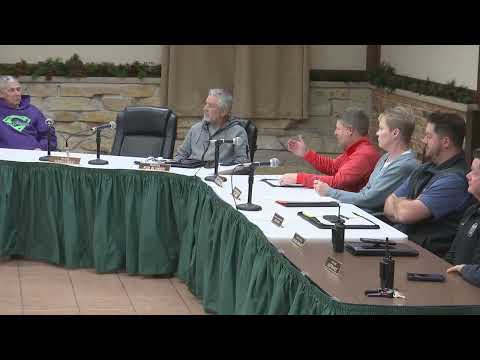
Morton authorizes IEPA loan application as sewer‑plant replacement plan could cost $35–45 million and push rates higher
Loading...
Summary
The village approved ordinance 26‑20 to authorize an Illinois EPA loan agreement that keeps Morton eligible for water‑pollution control financing to replace two aging sewer plants; engineers and staff said the project could cost roughly $35 million to $45 million, require a 20‑year loan with about $3 million in annual debt service at the high end, and prompt an estimated one‑time rate increase of about 35%.
Director of public works (Speaker 4) told the Village of Morton board the village must complete ordinance 26‑20 by the end of the year to remain eligible to receive Illinois EPA water‑pollution control loan funds if openings appear in the fund cycle.
"This document's required to, apply for additional funds to the IEPA bypass funding," Director of public works said, explaining the village missed the initial award cycle and wants to stay in position to accept financing if other communities’ projects fall through. He said the loan authorization is a procedural step that does not by itself commit the village to a final construction contract.
During a trustee question-and-answer period, board members flagged rising cost estimates. One trustee noted prior estimates near $35 million and said current materials showed about $45 million. "I think it's gonna be every bit of 35,000,000," the Director of public works responded, while also saying he expected updated numbers after an engineer meeting the following Monday.
Speaker 4 outlined reasons the village is planning full replacements rather than piecemeal upgrades: the two treatment plants have passed their useful lives, mechanical equipment and clarifiers are failing, and forthcoming nutrient‑limit regulations for phosphorus will require major upgrades. He also described sludge‑handling problems: the village temporarily stopped land‑applying sludge after arsenic concerns and now pays about $250,000 a year to press and haul sludge to landfill; the project would add an on‑site sludge press and a new building for processing.
Trustees discussed the fiscal impact. Using figures cited at the meeting, a trustee estimated that a $45 million, 20‑year loan would result in about $3 million in annual debt service. The trustee noted the village currently has about $7.5 million in water and sewer revenues and said covering the higher debt service could require a one‑time rate increase on basic utility charges in the neighborhood of 35%, followed by annual adjustments for inflation.
Director of public works said prior rate increases have been implemented but may be insufficient and that staff and the village engineer (McMahon Group) will return with refined cost and rate proposals. The ordinance to authorize the IEPA loan agreement application was moved, seconded and approved by roll call.
Next steps: the director said staff will meet with the engineer and provide updated cost estimates and options to the board; the IEPA‑agreement paperwork must be completed by year‑end to preserve eligibility.