Get Full Government Meeting Transcripts, Videos, & Alerts Forever!
Get email alerts on the Data Center Public Process topic
No spam. Unsubscribe anytime.
Council keeps data‑center questions active, places Bordoon communication in suspense until Jan. 14
Summary
Commissioners debated staff answers about taxation, water contracts and energy for proposed data centers and voted to place communication 2025-546 in the suspense file until the Committee of the Whole meeting on Jan. 14, 2026 (7–3). Residents and reporter Sarah Bordoon raised concerns about ratepayer risk and transparency from Northwestern Energy.
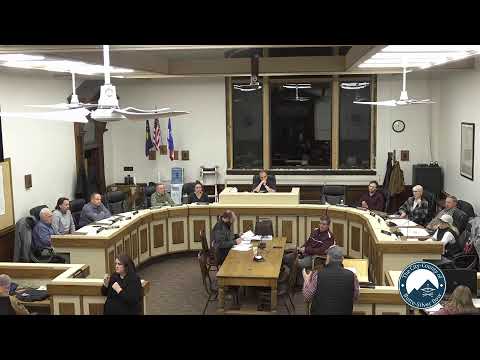
At a Dec. 10 Committee of the Whole meeting, Butte-Silver Bow commissioners continued a public conversation about proposed data-center projects and the local impacts of taxation, water contracts and power supply. Sarah Bordoon (author of communication 2025-546, associated with Beyond the Boom) submitted a list of technical and policy questions; staff read detailed responses and representatives of Northwestern Energy described how large-load contracts and tariff templates will be developed and presented to the Montana Public Service Commission.
Key points: staff told the council that data centers are eligible for the class-17 tax classification set by the Montana Legislature and that class-17 property is taxed at 0.9% of market value assessed yearly by the Montana Department of Revenue. Director Karen Burns explained that locating inside a targeted economic development (TED/TIF) district does not change the statutory 0.9% rate but allows the district to collect increment for district projects or enter remittance agreements that send increment back to taxing jurisdictions. Burns said Sabey has not requested abatements and that the example tax calculations in staff materials were demonstrative, not predictive.
Energy and ratepayer concerns drew sustained attention. Bordoon and other speakers urged caution about large data centers until large-load contracts, water agreements and rate protections are fully transparent. Northwestern Energy representatives said they are developing documents for large-load customers (over 5 megawatts) and argued that corporate restructuring and ring-fencing — as described in MPSC docket 2022.060.064 — protect Montana customers from costs until the acquired generation is needed to serve them.
Why it matters: data centers are large electricity consumers and can change infrastructure needs and tax-increment revenues in hosting communities. Questions over contract terms, water use and how increment revenues are used affect local governments’ ability to plan and protect ratepayers.
The council debated several procedural options about Bordoon’s communication: commissioners first proposed placing it on file or holding it in abeyance (several tied or failed votes, many recorded as 5–5), reflecting divided views on whether staff answers were sufficient and whether additional public comment opportunities should remain open. After additional motions, the council approved a substitute motion to place communication 2025-546 in the suspense file until the Committee of the Whole meeting on Jan. 14, 2026; the clerk recorded the vote as 7 yes, 3 no.
Public commenters and at least one council member suggested continued monitoring of Northwestern Energy’s filings with state and federal regulators. Evan Barrett urged the county to consider joining litigation or regulatory actions that would create specific tariffs or protections for ratepayers; Bordoon emphasized that the county should be cautious about large land-use and tax-increment commitments until risks and contract terms are transparent.
The council did not adopt any new contracts, abatements or water agreements at the meeting; staff provided clarifications and the item will return for further review and public input on Jan. 14, 2026.