Get Full Government Meeting Transcripts, Videos, & Alerts Forever!
Get email alerts on the Recovery Services topic
No spam. Unsubscribe anytime.
Rockbridge Recovery details services and unveils plan for women’s recovery residence in early 2026
Summary
Rockbridge Recovery told the Rockbridge County Board of Supervisors it expanded peer support, jail services and harm-reduction outreach this year and is renting a building to open a women’s recovery residence expected to accept residents in the first two months of 2026, supported by grants, churches and community donors.
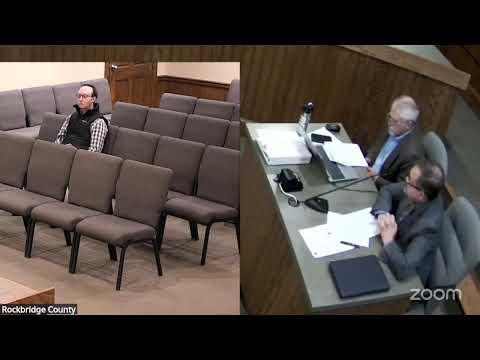
Jerry Schaff, chair of the Rockbridge Recovery board of directors, told the Rockbridge County Board of Supervisors on Nov. 24 that the nonprofit has expanded services this year and is preparing to open a women’s recovery residence early next year.
Schaff said Rockbridge Recovery’s Hope House is a six-month recovery residence for men that has housed 15 people to date, with four currently in residence and eight graduates. The organization also runs evening support groups, a SMART Recovery program for teens, a 24/7 warm line and jail-based peer services. “We house up to six men in a six-month program,” Schaff said.
Schaff described harm-reduction work as a major component of the nonprofit’s services: free revive training and distribution of free Narcan, free harm-reduction kits (about 400 kits distributed this year), and plans to begin HIV and hepatitis B finger-prick testing in early 2026 pending a supplies contract with the Virginia Department of Health. “All of our trainings are free. All of our harm reduction is free,” Schaff said.
On the women’s residence, Schaff said the group is renting a building adjacent to its offices and expects to house up to four women in a program modeled on Hope House: six months of life-skills training and recovery support. The organization plans to seek grants and local donations to purchase and furnish the building. “We hope to have the first women in residence sometime in the first two months of 2026,” Schaff said. Once two women are in residence, Rockbridge Recovery will pursue certification from the Virginia Association of Recovery Residences, Schaff added.
Schaff credited local partners for covering early costs: the building owner has supplied materials for renovations, a local mission built a ramp, several churches pledged to cover operating costs for the first year, and the Community Foundation committed to furnishing the house. He said staff are pursuing additional grant funding to buy the building.
Supervisors thanked Schaff for the update; no board action was requested or taken on the women's house during the meeting. Schaff answered questions from the board and said the nonprofit will return with updates as the VDH contract and facility certification proceed.
The presentation highlighted gaps in local recovery housing for women, the organization’s reliance on community donations and grants for capital and operating costs, and the need for state-level supply contracts to begin certain testing services.
Ending: The board received the update and extended thanks to Rockbridge Recovery; Schaff said he was available for questions and that staff would report progress on the women’s residence and VDH supply contract when available.