Get Full Government Meeting Transcripts, Videos, & Alerts Forever!
Get email alerts on the C And D topic
No spam. Unsubscribe anytime.
MassDEP C&D subcommittee presses processors for higher separation, eyes new markets for treated/painted wood
Summary
MassDEP's C&D subcommittee reported raising processor reporting frequency and process separation thresholds, increasing inspections, and pursuing market development for difficult streams such as painted/treated wood and wood chips.
The Solid Waste Advisory Committee heard a midcourse update on construction and demolition (C&D) action plan work on Nov. 18, in which MassDEP staff described stepped‑up reporting and oversight of C&D processors and continued efforts to develop end markets for recovered materials.
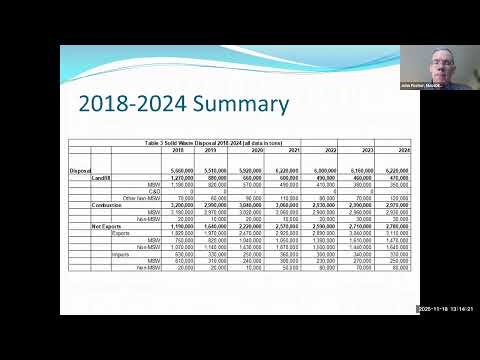
Mike Elliott, presenting the C&D subcommittee review, said MassDEP has about 30 large C&D handling facilities statewide, 18 of which are permitted as processors that recover recyclables from mixed C&D streams. He noted that the department recently moved large processors from annual to quarterly reporting and increased the process separation minimum threshold from 15% to 20% this year, with incremental increases planned to reach 25% by 2030.
Elliott flagged contamination — especially from treated or painted wood (sometimes called pressure‑treated wood) — as a persistent issue. "We've heard... we need to do something about eliminating contamination by treated wood," he said, and referenced California’s treated‑wood alternative management standards as one model for segregation, storage and disposal practices. The subcommittee said it will examine best practices, outreach to contractors, and workforce development to improve on‑site separation and reduce contamination at processors.
Market development and interagency work: The C&D work group is coordinating with MassDEP's recycling market development team and external partners to identify markets for clean wood and tougher streams. Elliott said MassDEP is exploring opportunities with large public works projects and with agencies such as DCAM (Division of Capital Asset Management and Maintenance), MassDOT and DCR to identify reuse or recycled‑content uses for materials such as asphalt shingles and processed glass aggregate.
Compliance and inspections: Elliott said MassDEP is working to increase site inspections, develop objective compliance standards for C&D residuals, and ensure satisfactory process separation performance; the department also reported hiring a small inspection team to ramp up oversight.
Next steps: The C&D subcommittee plans a joint December meeting (Dec. 11) with the Recycling Market Development work group focusing on specific materials (asphalt shingles, gypsum wallboard, plastics and masonry), and will continue to pursue processor reporting, outreach to builders and contractors, and pilot reuse projects with state procurement partners.