
Public commenters raise social‑media policy concerns, prayer objection and allegations of misconduct
Get AI-powered insights, summaries, and transcripts
Subscribe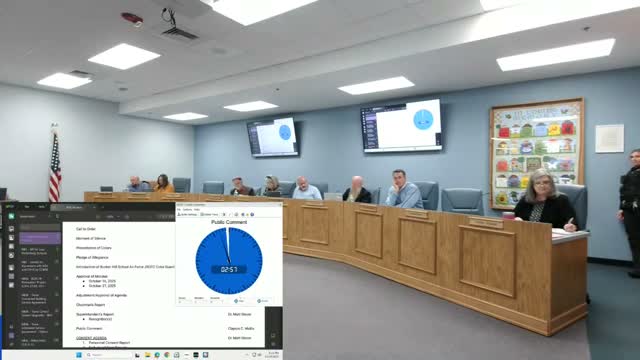
Summary
Public commenters at the Nov. 24 Catawba County Board meeting urged the board to honor Dr. Leslie Barnett’s educator perspective, objected to a pre‑meeting Christian prayer, criticized proposed employee social‑media rules for vagueness, and alleged past systemic misconduct and cover‑ups in district leadership.
Several members of the public used the board’s three‑minute public‑comment period on Nov. 24 to make distinct appeals and objections to the school board.
Lynn Dorfman opened public comment with a tribute to Dr. Leslie Barnett (d. Aug. 26) and urged the board to keep an educator’s perspective in mind when selecting a replacement for Barnett’s unexpired term. The board thanked Dorfman and acknowledged the donation drive done in Barnett’s honor.
Kimberly Turk addressed a proposed employee social‑media policy and described specific concerns: she said the policy would hold employees responsible for content posted by others who tag them, that provisions banning 'profane, pornographic, obscene, indecent, lewd, vulgar' and other broadly defined material are overbroad, and that clauses prohibiting posts that 'negatively impact' job performance could be used to intimidate employees. Turk said many people have been hacked or tagged by others and should not be held accountable for third‑party posts.
Lawrence Wiedemann objected to a board‑sanctioned pre‑meeting Christian prayer. Wiedemann argued the practice risks government endorsement of religion, excludes non‑Christian beliefs and is ethically wrong even if not technically illegal.
Greg Meadows, identified as a former teacher, made a series of serious allegations about the district: he described what he termed patterns of abuse, neglect, alleged cover‑ups, mishandled misconduct investigations, missing workers’ compensation checks and cases where parents were not informed of student injuries. Meadows said he witnessed people being 'abandoned' by leaders and called for transparency and courageous leadership to stop harmful practices.
The meeting record shows the public comments were presented to the board but contains no extended on‑record responses or rebuttals to the specific allegations made by Meadows or Wiedemann during the session. The board acknowledged several speakers and proceeded with agenda business, later conducting the vacancy appointment and other actions.
The transcript records these claims as public comment; no formal findings, investigations or administrative actions were announced at the meeting in response to the allegations.