Get Full Government Meeting Transcripts, Videos, & Alerts Forever!
Get email alerts on the Community Area Plans topic
No spam. Unsubscribe anytime.
Charlotte council adopts seven community area plans, defers seven for more outreach
Summary
After hours of public testimony and council debate, the Charlotte City Council voted to adopt seven community area plans with proposed changes and deferred seven others for additional community engagement and refinement no later than March 23, 2026.
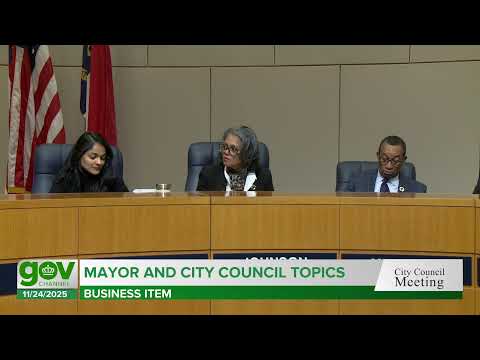
The Charlotte City Council voted Nov. 24 to adopt seven community area plans and to defer consideration of the remaining seven until no later than March 23, 2026, after hours of public comment and an extended debate among council members.
Councilmember Victoria Watlington moved to adopt plans for areas labeled A, E, G, H, I, J and K — described in staff materials as East Inner, Northeast Inner, South Inner, South Mid, South Outer, Southwest Middle and Southwest Outer — with proposed changes. The motion, which also directed staff to defer plans B, C, D, F, L, M and N for further targeted engagement, carried after a substitute motion to split approvals failed on a 4–6 tally.
City planning staff provided an overview of how adopted community area plans function as policy guidance for rezoning and capital-investment decisions but do not immediately change parcel zoning. Monica Holmes said adopted plans add a second policy layer that staff will reference when assessing rezoning consistency and when developing future text amendments aligned with state law.
Speakers at the public hearing were divided. Sustain Charlotte urged the council not to leave any geographies “flying blind” and asked for a complete baseline of adopted plans so staff and the public had consistent guidance. Residents from Westside neighborhoods urged individualized review, saying some communities face risks from nearby industrial zoning, heat and displacement and needed more time for targeted outreach.
Supporters of the phased approach, including Councilmember LaJuana Mayfield and others, said additional engagement would help ensure the plans respond to concerns about manufacturing adjacent to single-family neighborhoods and to clarify implementation language. Opponents of deferral, led by Councilmember Ed Driggs and others, argued that delaying some plans would disadvantage those geographies in pending rezoning decisions and asked that council separate the vote so plans ready for adoption could proceed immediately.
The council also voted to adopt a revised policy map that incorporates the seven plans approved that evening. Council members and staff said the deferred plans will be the subject of targeted outreach and policy refinements and may be brought back earlier than March if the council so directs.
The council’s actions set a phased, iterative timeline for citywide area plan coverage while leaving open the possibility of further amendments once additional public input and staff refinements are completed.