Johnson County outlines Module 1 of zoning overhaul, staff proposes consolidating zoning boards
Loading...
Summary
County planning staff presented Module 1 of an overhaul to the zoning code — reducing district types, adding an open‑space park district, and posting drafts for public comment — and recommended consolidating two zoning boards into a single nine‑member board with BOCC action expected in January 2026.
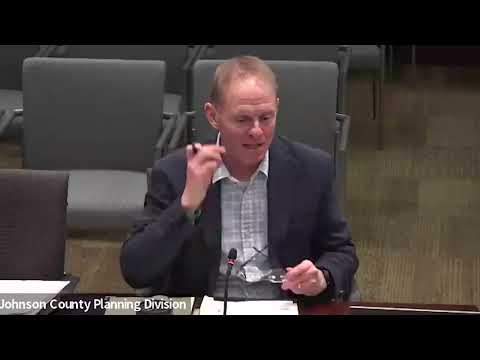
Johnson County planning staff on Tuesday gave commissioners an overview of Module 1 of a comprehensive zoning update and introduced a staff recommendation to consolidate the East and West zoning boards into a single, nine‑member consolidated zoning board.
Planning staff said Module 1 covers zoning districts, permitted uses and dimensional standards and is intended to replace decades‑old text with clearer tables and graphics. "The last comprehensive update to the regulations was 1994," county planning staff said, and the draft reduces a large number of plan‑district variants to a smaller set of base districts — cutting the total number of districts from roughly 18 to about 11 or 12, staff said — and adds a new open‑space/parks district intended to streamline park development approvals.
The module is posted on the county project webpage and staff said the public can comment through the project’s online platform (transcribed as “Conveo”/“Conveio”). Staff expects to bring Module 2 (detailed development standards, such as parking, landscaping, signs and lighting) in early 2026 and aims for full adoption of the updated code by mid‑2026.
On zoning boards, planning staff presented consolidation history and metrics on meetings and applications. Jay Leipzig said consolidations have occurred several times since 1984 and explained the statutory framework for membership. Staff recommended creating one consolidated zoning board with nine members (three appointments from each of three appointing authorities in staff’s proposal), while keeping the Planning Commission at 12 members; the BOCC asked staff to return in January 2026 with a reorganization resolution.
Commissioners pressed for details on geographic representativeness, application volume trends and mitigation requirements for potentially disruptive developments. Commissioner Richardson said the code should impose measurable mitigation — for example, lighting shielding and traffic controls — and urged that developers be required to shoulder mitigation responsibilities when large projects are approved. Staff and commissioners agreed that Module 2 will include more objective standards for noise, lighting and traffic to make violations easier to measure and enforce.
Next steps: staff will continue public outreach on Module 1, present Module 2 early next year, and return to the Board of County Commissioners in January 2026 with a consolidation recommendation; if approved the reorganization resolution would be acted on by the BOCC and new appointments would be made in advance of proposed regulatory adoption in mid‑2026.