Get Full Government Meeting Transcripts, Videos, & Alerts Forever!
Get email alerts on the Short Term Rentals topic
No spam. Unsubscribe anytime.
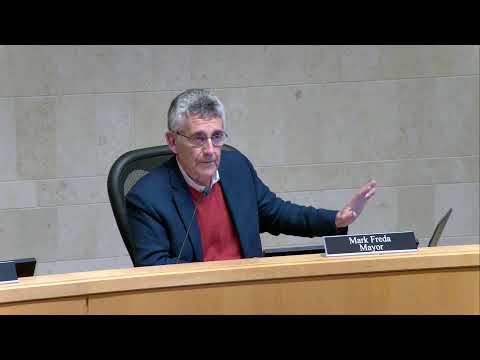
Princeton council adopts ordinance regulating short-term rentals with three-year phase-out for non-owner units
Summary
On Dec. 8, 2025, the Princeton mayor and council adopted Ordinance 25-20 to regulate short‑term rentals, add an occupancy tax, and phase out non‑owner-occupied units over three years; the vote followed public testimony from hosts and neighbors and promises to monitor local data.
Princeton — The mayor and council voted Dec. 8 to adopt Ordinance 25-20, a new set of rules for short‑term rentals that imposes an occupancy tax, amends municipal code chapters 15A and 16, and phases out non‑owner-occupied short‑term rental units over a three‑year period.
Councilman David Cohen, who said the ordinance was the product of a working group of staff, the mayor and councilmembers, described the measure as an attempt to "balance the need to preserve traditional rental housing for long‑term residents" with visitor accommodations not provided by hotels. "I feel good about where we landed," Cohen said during the public hearing.
Why it matters: Supporters of the ordinance told the council it aims to protect year‑round residents from speculative conversion of rental housing, while some hosts warned the rules will affect livelihoods. James Mogilever, a local short‑term rental operator, asked the council to include a review clause that would trigger a decision two years into the three‑year phase‑out so the council can rely on Princeton‑specific data rather than comparison to other towns. "This would give the council two years of real Princeton data to work with," Mogilever said.
Enforcement and housing concerns drew sharp comments. Longtime resident Chip Bridal said enforcement will be difficult because many listings do not include addresses and "I doubt if Airbnb or Vrbo would respond to a subpoena for a noncriminal thing." He warned that short‑term rentals can remove low‑income apartments and "destroy neighborhoods," saying owners could convert affordable units into tourist lodging.
Several residents raised technical questions about "rooming houses" and how the ordinance will treat properties that rent multiple rooms to individuals. Staff replied that the ordinance limits the number of rentable rooms in a house, requires registration, and that owner residency would be verified with a driver's license or voter registration; staff also said rooming houses for long‑term rentals are largely treated differently from short‑term rentals under the code.
Natalia Mogilever, who identified herself as an immigrant and host of roughly 14 listings, urged councilmembers to consider the personal impact of the change. "This business became my passion... we are very responsible hosts," she said.
Council response and next steps: Cohen said the council will follow data gathered from the planned registration system and can amend the ordinance later, but he expressed reluctance to include an automatic sunset provision that would place the burden on the council to renew the measure. "We can amend the ordinance at any time," he said, "but I don't want to put in a sunset." Other councilmembers reiterated that the ordinance is designed to protect residents' ability to live and raise families in Princeton.
Vote: The public hearing was closed and the council conducted a roll‑call vote. The transcript records: Mr. McDonald — Yes; Mr. Cohen — Yes; Ms. Sachs — Yes; Ms. Fraga — Yes; Mr. Newland — Yes. The motion carried and the ordinance was recorded as adopted in that roll call. The transcript does not record the mayor's vote.
Implementation: The ordinance includes a three‑year phase‑out period for existing non‑owner‑occupied short‑term rental listings; council members said the registration system will supply data to monitor local impacts and that the council may return to amend the ordinance if needed.
The meeting also recorded additional, routine items including introductions of two other ordinances with public hearings set for Dec. 22 and several resolutions on transit, traffic‑signal maintenance, sewer repairs, wireless site licenses and other contracts that the council approved by vote.