Cerritos staff propose water and sewer rate increases to pay for decades‑old system
Loading...
Summary
Cerritos public works officials told commissioners the city’s water and sewer systems — much of which was built in the 1970s — face urgent repairs and a projected $81 million funding gap over five years; staff proposed a reduced five‑year capital plan and a Proposition 218 rate notice with a hearing set for Jan. 26, 2026.
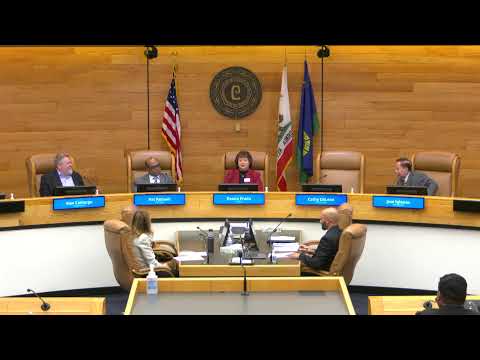
Cerritos public works officials told the city commission on Wednesday that aging wells, pipes and pump stations require immediate investment and that utility rates must rise to avoid deep cuts to other city services.
"For years, residents have enjoyed very low rates," said Alvin Papa, director of public works. "But now the rates that are being proposed, they are high...we have a large need." He said the city faces an estimated $81,000,000 funding gap over the next five years if rates remain unchanged and that continuing to subsidize the utilities from the general fund is not sustainable.
The presentation described the water system as four wells (three active, one inactive), three reservoirs, booster stations and roughly 172 miles of pipe serving about 15,400 service connections. Staff said much of the infrastructure is 50–60 years old and cited frequent pipe leaks, rusted valves, cracked reservoir structures and pump and variable frequency drive failures.
Staff cited consultant recommendations to replace about one mile of pipe per year at roughly $3.3 million per mile and said a five‑year pipe replacement plan would total about $17 million. They also identified cathodic protection and automated meter infrastructure as needed projects that are not currently funded.
"If the water and sewer rates stay where they are, we're going to need $81,000,000 of funding," Papa said, warning that shortfalls could force the city to cut nonessential services such as road repairs, tree programs, senior center enhancements and even make deeper cuts across the general fund if necessary.
Chris (assistant director, public works) described a five‑year capital improvement plan that staff reduced from an initial $43,000,000 to about $23,000,000 (about $25.3 million after a 4% inflation allowance) to limit rate impacts. The plan prioritizes critical projects, including the C‑4 well project (estimated at about $16,000,000). Under the proposed rate path staff said the water fund would require approximately $9,500,000 in general fund support over the five‑year period and would reach self‑sufficiency by July 1, 2029; under the status quo staff estimated roughly $69,000,000 in general fund transfers would be required instead.
Staff compared local groundwater costs ($454 per acre‑foot) with imported State Water Project supplies (about $1,698 per acre‑foot), noting that maintaining local wells reduces reliance on costlier imported water. Papa said rebuilding a well typically costs $12–15 million and that well design and construction can take about five years from funding to operation.
Sewer needs were also detailed: staff reported roughly 146 miles of sewer pipe, over 3,000 manholes and six pump stations. The five‑year sewer program in the proposal included about $1.2 million for CCTV inspection and $2.4 million for pipe replacement. Staff cited a recent Category 1 sanitary sewer overflow in November that released an estimated 250 gallons to the street and storm system and required emergency cleanup.
On affordability, staff proposed a low‑income assistance program modeled on the CPUC’s SCE CARE discount and suggested a fixed bimonthly discount of $40 for eligible households; staff estimated staff estimate that about 23 households could qualify based on available enrollment data and plans to return to council with program details at the Jan. 26, 2026 public hearing.
Staff said Proposition 218 notices were mailed to property owners and customers on Nov. 13, 2025 and that the city will hold a public hearing on Jan. 26, 2026, at which written protests must be received by the city clerk before the close of that hearing. (Staff’s reading of the notice included a typographical error for the year in one line of the oral summary.)
Commissioners asked about alternatives to residential rate increases — including bond financing and enhanced infrastructure financing districts — and were told those options are complex, carry tradeoffs and historically the city funds its CIP in cash. Commissioners also suggested valve rehabilitation and water‑use efficiency measures; staff said they will evaluate refurbishing valves where feasible and pursue conservation and grant opportunities to reduce bills for businesses and residents.
Long‑time resident Keith Vanderlynen commented during public comment that maintenance had been neglected for decades, accused city management of hiding rate details and urged the commission to consider cutting expensive projects instead of raising rates. "They're trying to put this increase under the rug," Vanderlynen said.
The commission voted to receive and file the informational report; staff will return with detailed rate ordinance materials and the item will come before the city council at the Jan. 26, 2026 public hearing required under Proposition 218.