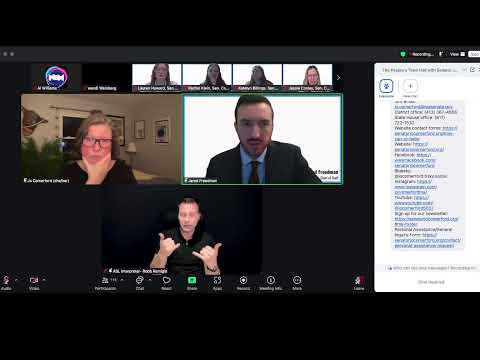
Comerford presses for formula fixes, PILOT reform and microtransit to shore up Western Massachusetts
Loading...
Summary
State Sen. Joe Comerford said formula and grant changes are beginning to shift more money to Western and North Central Massachusetts, highlighted a new PILOT commission he’ll serve on to better value state-owned land, and urged scaling microtransit and rural grant access.
Sen. Joe Comerford on Monday outlined a multi-pronged effort to reduce long-standing fiscal disadvantages in Western and North Central Massachusetts, saying formula changes and targeted grants are beginning to deliver more funding but that more work remains.
Comerford told constituents that longstanding formulas — including chapter 90 road-and-bridge funding and school funding formulas — have disadvantaged rural communities and that recent rule changes have started to help. "Now that formula is going out, one third of it fully, miles only," he said, noting this adjustment should bolster allocations for towns with many road miles but low assessed value.
The senator highlighted the Municipal Vulnerabilities Program as a specific example of a grant rework: the administration created a rural set-aside, removed the local match requirement and adjusted scoring to make the program more accessible to small towns. Comerford said those changes followed advocacy from Western Mass leaders and the Healy–Driscoll administration.
Comerford also explained a Payment-in-Lieu-of-Taxes (PILOT) pilot commission established by the governor to re-examine state payments for state-owned land. "Payment in lieu of taxes is what the state provides for what's called state-owned land in a city or town," Comerford said, arguing Western Mass is shortchanged because land values and ecosystem services are not fully recognized. He said he has been appointed to that commission and will press for recognition of ecosystem services and greater equity in valuations.
On transportation, Comerford pointed to two earmarks his office secured and a Franklin County pilot that tested microtransit services with FRTA and FERCOG. "You can send a zippy little public Uber," he said, describing microtransit as a way to link remote areas to fixed routes without running large buses up narrow rural roads.
Comerford and his staff urged residents to participate in grant processes and legislative hearings so that scoring and application procedures continue to be refined for rural communities. He said municipal infrastructure proposals (for DPW, fire stations, town halls) could be advanced through amendment strategies in the Municipal Empowerment Act and related bills.
The next step, Comerford said, is implementation at the state-agency level and continued constituent advocacy to ensure reforms translate into tangible funding for towns in the district.