Get Full Government Meeting Transcripts, Videos, & Alerts Forever!
Get email alerts on the Stormwater Management topic
No spam. Unsubscribe anytime.
Commission hears technical briefing and sustained public concern on stormwater; asks city attorney to draft options
Summary
Planning commission members heard a technical briefing from Public Works Director Kevin Wayne on Huntington Woods' combined sewer system and rehabilitation methods, listened to several residents' accounts of chronic backyard flooding and enforcement failures, and asked City Attorney Matthew Zaleski to compile model ordinances and legal options for the commission to consider.
The Huntington Woods Planning Commission on Tuesday devoted major discussion time to stormwater management and the city’s combined sewer system, receiving a technical briefing from Public Works Director Kevin Wayne and sustained public comment from residents reporting repeated backyard flooding and perceived lapses in enforcement.
Staff presented a sewer map and explained ongoing rehabilitation work: in‑pipe lining to extend service life with minimal excavation and, where necessary, more intrusive pipe‑burst replacement that entails excavation and re‑tapping private connections. Wayne said lining reduces costs and disturbance and that lining slightly reduces internal pipe diameter (about a quarter‑inch), a trade‑off the city accepts to avoid frequent back‑yard digs.
Commissioners and residents pressed staff on whether lining can increase surface accumulation of water and on how capacity is measured; staff acknowledged some residents reported more visible surface water after work in isolated cases but said that increased inspection and targeted lining are intended to prevent full pipe failures. Commissioners asked for quantitative capacity thresholds and what rainfall intensity triggers system overloads.
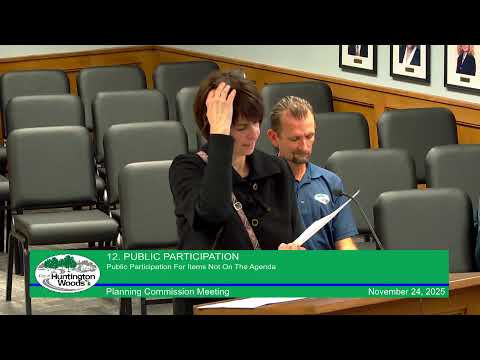
Multiple residents gave detailed public comments describing chronic yard flooding, damaged landscaping, and cases where driveway work or new construction altered flow paths. Several speakers urged the city to enforce existing ordinances (citing municipal code sections referenced in public comment) before allowing additional permitted connections that could increase load on the combined system. One resident described having to bring civil cases to obtain remediation.
City Attorney Matthew Zaleski joined the discussion at staff’s request and reviewed legal tools: prohibited‑connection rules, nuisance/zoning enforcement, and the evidentiary and procedural limits of complaint‑driven enforcement on private property. Zaleski said he would research how other communities with combined sewers handle prohibited connections, retention thresholds, and inspection language and return with draft ordinance language focused on intent, enforceable standards and education.
The commission directed staff and the city attorney to assemble sample ordinances from communities that have dealt with similar infrastructure and to prepare options that could include retention thresholds, requirements for first‑flush capture on large additions, and education/outreach on best management practices. Staff confirmed there is no December planning commission meeting; members expect an update in January.