Get Full Government Meeting Transcripts, Videos, & Alerts Forever!
Get email alerts on the Tax Increment Financing topic
No spam. Unsubscribe anytime.
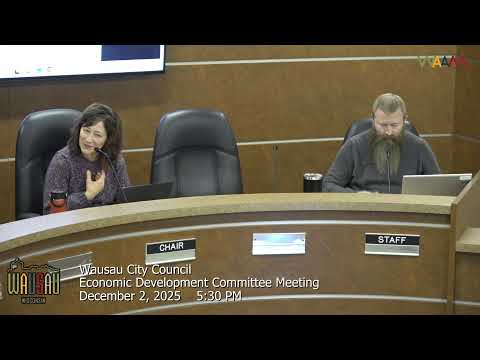
Wausau committee votes to extend TID No. 7 for one year to support affordable housing
Summary
After debate over alternatives, the committee voted to keep Tax Increment District No. 7 open for one year with the goal of dedicating most increment to affordable housing; some members urged pursuing state and federal grant options as alternatives.
The City of Wausau Economic Development Committee on Dec. 2 voted to extend Tax Increment District (TID) No. 7 for one year, with a stated priority for affordable housing. Staff presented three options for the TID (close, close with transfers to operating budgets, or extend for one year under state guidelines) and outlined tentative uses such as Thomas Street infill, MBX property redevelopment and 1300 Cleveland Avenue.
Alder Henke moved to keep TID 7 open for one year for affordable housing; the motion was seconded and the committee approved the extension by voice vote. Committee members emphasized that TID dollars would typically be one part of a financing "capital stack" and that the city would continue to pursue state and federal grants to reduce reliance on local increment.
Dissent and alternatives: Alder Killian opposed the extension and asked staff to provide a list of potential state and federal funding sources for redevelopment, saying, "I am not in support of the TID extension" as presented. Staff and other members responded that the city often "stacks" TID dollars with other grants and that keeping the funding source available allows the city to move more quickly on shovel-ready projects.
Fiscal context: Finance staff (Mary Anne) said the city's general fund reserves are healthy and recommended general language in any resolution describing eligible uses (for example: develop affordable single-family and multifamily housing; rehabilitation of existing housing stock). Staff noted that, under state guidelines, 75% of increment used in an extension must go to affordable housing and 30% of units funded must meet HUD income thresholds for low-income households.
Next steps: The committee's recommendation will go to the finance committee and then to the full common council, which will adopt a resolution describing allowable uses for any extension. The committee did not adopt a detailed budget; members said other grant options will continue to be explored as part of project capital stacks.
Sources: staff presentation and committee debate at the Dec. 2, 2025 Economic Development Committee meeting.