Get Full Government Meeting Transcripts, Videos, & Alerts Forever!
Get email alerts on the Parking Policy topic
No spam. Unsubscribe anytime.
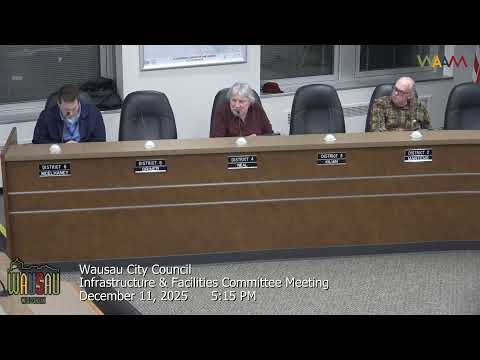
Committee removes 2-hour parking limit on stalls near YMCA after debate over seniors' access
Summary
The committee voted 4–1 to remove 2-hour parking restrictions on new stalls near the YMCA and the landing, after members debated enforcement tweaks, a temporary moratorium on ticketing and a six-month trial to assess impacts.
Aldermen voted to remove two-hour parking limits on a cluster of new stalls near the YMCA and the landing, following a lengthy discussion about enforcement, equity for older residents and potential spillover for downtown workers.
Alder Larson, who placed the item on the agenda, told the committee the stalls — which the YMCA helped fund — were intended to serve landing users and that two hours is not long enough for many programs. "I got a ticket for being over there 2 hours now," Larson said, describing a personal experience that he said motivated the request. He added that many landing activities run well past two hours.
The committee debated alternatives: Alan (city staff) noted the signs were placed because the area is inside the downtown parking district and that changing them would be a minimal sign adjustment; Alder O'Neil and others urged enforcement-focused fixes such as adjusting patrol timing so officers do not ticket legitimately parked users every two hours or issuing a window decal for landing members to identify permitted cars. Alder Oliver said he had asked Police Chief Barnes for a temporary moratorium on ticketing while the committee considered changes and that the chief agreed.
After discussion, Alder Larson moved to post no parking from midnight to 6 a.m. on the affected stalls for a six-month trial, but he later amended the motion at the committee’s direction to remove the midnight/overnight clause and instead remove the two-hour signs. The amended motion also included direction to gather patrol data and revisit the outcome after six months. The motion passed 4–1.
Why it matters: The change shifts how short-term curb space near a senior-serving facility will be managed and signals the city’s willingness to use localized signs and enforcement timing to prioritize access for specific program users. Council members emphasized they could revisit the policy if the stalls attract long-term parkers or create parking shortages for nearby downtown businesses.
What’s next: Staff will remove or change signage per the committee's motion and collect enforcement data over the coming months; the committee requested a follow-up report in roughly six months to determine whether additional measures (a permit or window decal system) are needed.