Get Full Government Meeting Transcripts, Videos, & Alerts Forever!
Get email alerts on the Zion Church topic
No spam. Unsubscribe anytime.
Daughter of detained pastor describes mass takedown of Zion Church; witnesses document harassment of congregants
Summary
Grace Jin Drexel and witness groups told the CECC that Pastor Ezra Jin and dozens of Zion Church leaders were arrested in a wide crackdown on independent house churches, describing asset seizure, family intimidation, and transnational pressure on activists abroad.
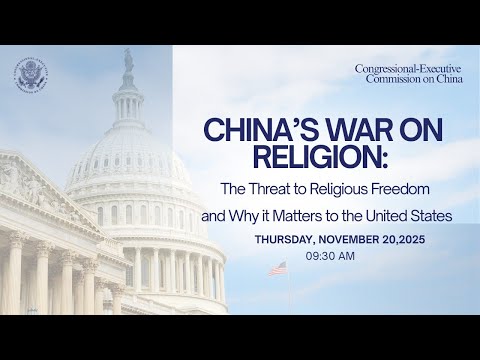
At a Congressional‑Executive Commission on China hearing, Grace Jin Drexel recounted that Pastor Ezra Jin — leader of an influential urban house church known as Zion Church — was detained in an October crackdown that targeted dozens of independent Christian leaders.
"On October 10, my father, pastor Ezra Jin was arrested by the Chinese authority along with 27 other church pastors and leaders of Zion Church," Drexel said. She told commissioners that 17–18 church leaders had been formally arrested and that police "seized and shuttered the church buildings, took hold of church assets, and briefly detained and closely surveyed the pastors and leaders." Drexel described broad reprisals against congregants, including threats to employment, housing and children's education.
Drexel said Zion responded to earlier pressure by developing a hybrid online‑offline model that expanded its reach nationwide; she told the commission the church's outreach "reached 10,000 people daily" at its peak. Several witnesses, including Dr. Bob Fu, described patterns of criminal prosecution against pastors for routine church finances and online worship, with sentences ranging up to 15 years in cited cases.
Witnesses also described transnational repression: Drexel and others said family members in China received threatening calls after advocacy in the United States and that some activists felt watched while in Washington. Commissioners expressed support for immediate diplomatic pressure and asked witnesses for written recommendations and evidence to guide potential sanctions and asylum interventions.
The commission left the hearing record open for an additional week and requested written follow‑up within three weeks.