
Batavia USD 101 board hears midyear update on student growth, finances and operations
Get AI-powered insights, summaries, and transcripts
Subscribe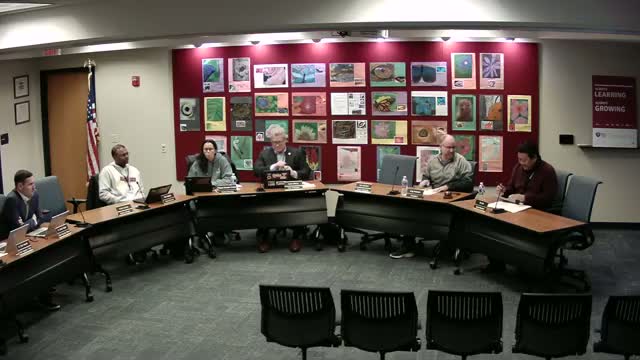
Summary
District leaders reviewed midyear results on MAP and ACT-based growth measures, an inclusion-and‑belonging metric, and operational indicators — including finance, food service uptake, technology uptime and a pilot indoor-air dashboard — and described next steps for spring reporting.
District leaders delivered a midyear progress report to the Batavia USD 101 Board of Education, reviewing academic-growth measures, special-education outcomes, and multiple operational priorities.
The presentation opened with the board‑adopted power metrics: MAP growth for K–8 and lower grades, ACT measures for high school college readiness, a sense-of-belonging indicator, and a financial-profile metric from the State Board of Education. Presenters said MAP is computer‑adaptive and administered three times a year; because MAP completed a recent renorming, trend lines will look different and the district will present updated comparisons in the spring.
On subgroup performance, district data staff highlighted that students with individualized education programs (IEPs) improved on MAP growth targets — from about 49% meeting targets in 2023 to roughly 64% in subsequent years — and said Hispanic students remain an area for focused support in math, in part because of language demands of current instruction.
Tony, who leads the district’s operations and finance reporting, outlined how the State Board’s financial-profile score aggregates revenue-to-fund-balance ratios, days cash on hand and debt measures. He said the district has recently averaged a 4.0 on that profile, which the presentation described as ‘recognition’ status, and warned that scores below 3.5 move a district into a ‘review’ category used by the State Board.
Technology and operations reports followed. Dave Thirillbey of the technology department said the district sees about 14,000 devices connecting daily (roughly three devices per student for an enrollment of about 5,100), a peak throughput near 7.8 gigabits per second and billions of security events filtered daily; he reported a year-to-date 98% on-time ticket‑resolution rate. The business office reviewed a payments platform rollout started last August and an expansion of meal-accounting; the district reported a 17% year-over-year increase in meal counts under food-service vendor Organic Life.
Facilities and transportation staff said they are tracking ticket response and resolution times (response approaching one day; resolution averaging five days with a target of three) and have started an indoor-air‑quality pilot at HD Storm that will feed a dashboard expected early next year. Transportation staff reported roughly 190 routes and no accidents to date, while acknowledging driver-recruitment pressures with vendor Illinois Central.
Board members asked clarifying questions during the presentations, including the mechanics of MAP growth calculations, how the ACT college‑readiness benchmark is interpreted (presenters described it as a predictive 75% chance of earning a C or better in freshman college courses), and what triggers State Board financial review status. Presenters repeatedly emphasized the district’s shift toward using disaggregated data to inform interventions at both building and district levels.
The board received the midyear report and was told a fuller spring report — including renormed MAP comparisons and expanded Panorama measures of belonging — will be presented at a future meeting.