
OPRF Board hears concept design for "Act 3" performing-arts project after ComEd constraint shifts plan
Get AI-powered insights, summaries, and transcripts
Sign Up Free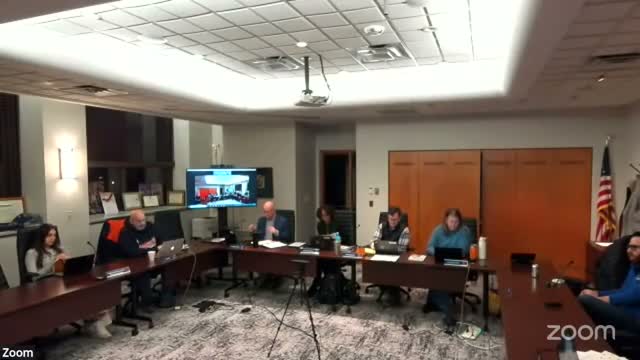
Summary
Oak Park-River Forest District 200 staff and architects recommended Option 3C for the "Act 3" performing-arts and athletics project after ComEd engineers said an on-site expansion over a transmission line is not feasible; the board was asked to fund schematic design work in January to refine costs ahead of a possible April 2027 referendum.
Oak Park-River Forest SD 200 officials presented a concept design for "Act 3," a proposed performing-arts and athletics renovation at OPRF High School, on Dec. 18, 2025, and recommended a version that fits within the existing building after learning a nearby ComEd transmission line blocks westward expansion.
District architects and staff described seven design options and said their recommended plan, Option 3C, would convert the 1 West Gym footprint into a black-box theater with dedicated backstage, basement rehearsal and storage, and re-create a replacement multiuse gym on an upper floor to preserve physical-education capacity. Karen Sullivan, a district presenter, said the option “meets the programming needs we identified” without requiring relocation of the transmission line.
The board heard that senior ComEd transmission engineers told the district that relocating the line would be both costly and time-consuming. Presenters reported ComEd’s estimate of about $30,000,000 and roughly a four-year project to move the line — a timeline and price that the district said would materially delay or derail the expansion plan. "We can't build over the line because they need to be able to service the line," a district presenter said during the briefing.
Public comment emphasized the programmatic need. Naomi Lord, a parent, told the board the current facilities were last updated nearly 60 years ago and said, “Having access to facilities that meet the needs of the performing-arts department is vital to helping to support our educators and students.” Alumni, parents and students described overcrowding, lack of storage for large instruments, and accessibility barriers. Student speakers said the program fosters community and inclusion and urged the board to support the project.
Presenters cited comparative data showing OPRF offers more curricular performing-arts courses and more annual performances than peer districts and described a racial-equity analysis intended to ensure the design improves accessibility and community partnerships. Doctor Lee Williams, interim director of equity, said stakeholder input highlighted high interest from students of color and people with disabilities in accessible, usable facilities.
Administrators said the next budget step is a request to the board on Jan. 15 to fund schematic-design work, which would produce construction cost estimates the district would use to shape funding decisions. The presentation also included a reference timeline that lists April 2027 as a potential referendum date if the board and community choose to pursue voter approval for construction funding.
The board took no final funding vote on Dec. 18. District staff said they would return with schematic designs and cost estimates after the January action so the board can make a financing decision and, if pursued, set any referendum schedule.