Get Full Government Meeting Transcripts, Videos, & Alerts Forever!
Get email alerts on the Oem Audit topic
No spam. Unsubscribe anytime.
Audit finds inventory, procurement and pay‑practice gaps at Office of Emergency Management; chief pledges fixes
Summary
An internal audit of Nashville's Office of Emergency Management covering Jan. 2023–Dec. 2024 identified six observations — including inconsistent inventory records, prepaid uniform payments that skirted contract rules, concentrated year‑end spending, unclear extra‑pay practices, higher office‑supply costs, and IT purchases made without ITS approval. OEM accepted most recommendations and says it is 80% complete on remediation.
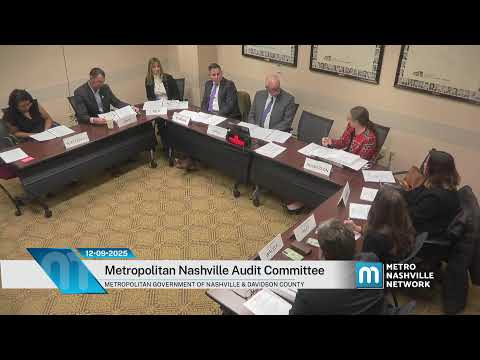
An internal audit released to the Audit Committee found multiple control weaknesses at the Office of Emergency Management (OEM), though auditors said the office has accepted and begun addressing most recommendations.
The audit, covering Jan. 2023 through Dec. 2024, examined five areas: operating expenses, payroll, grant management, inventory/asset management and organizational structure. Auditors reported six observations (two high risk, two medium, two low) and recommended written policies, clearer procurement practices and improved inventory controls.
Auditors said they found three separate OEM inventory lists that were not consistently maintained, with disposed items still appearing on asset lists and some in‑use items missing. “We recommend the department adopt a policy defining what constitutes an asset, set thresholds tied to grant or operating rules, and schedule regular inventory counts,” the audit states. The office accepted that recommendation and has started implementing inventory tagging and procedures.
The report also flagged prepaid uniform invoices in June 2023 and June 2024. Auditors said the vendor’s contract prohibits invoicing before delivery and that the purchases should have triggered procurement controls for contracts above $50,000 over a five‑year look; they recommended stopping prepayments and using purchase orders or working with Metro Finance to document appropriate recording. Auditors said OEM accepted the recommendation and has taken steps to remedy it.
Auditors found that roughly 30% of OEM spending occurred in June, the fiscal year‑end, creating a risk of rushed or unnecessary purchases. The report recommends planning purchases across the year and strengthening budget monitoring. OEM accepted the recommendation.
One audit finding remains unresolved at the time of the report: inconsistent extra‑pay practices. Because OEM employees are not in civil service, auditors recommended a clear departmental policy on overtime, comp time and premium pay so compensation is applied consistently. The audit notes the department has not yet fully implemented a policy on that point.
The review also identified a $2,500 office‑supply purchase that cost about 20% more than Metro’s preferred vendor and several tablet and laptop purchases that did not receive ITS approval. Auditors recommended price comparisons for nonessential purchases and ITS sign‑off on devices that connect to the network; OEM reported it has circulated updated procedures to staff.
Chief Will Swan, who appeared before the committee, said OEM welcomes audits and has completed about 80% of required actions related to this review. “When we had this audit, when it was over, I said, ‘thank God,’” Swan said. He told the committee OEM holds back funds late in the year to ensure it can respond quickly to unplanned emergencies but affirmed the office will adopt better documented processes. “We will be better stewards of being more responsible,” Swan said.
Swan said OEM will implement a three‑year uniform tracking approach, finalize grant inventory work (which he said may take longer), and pursue converting OEM positions to civil service “hopefully, this upcoming 2026 year” to reduce pay inconsistencies.
Committee members asked whether the audit recommendations would reduce OEM’s ability to respond to emergencies. Swan replied they would not, saying coordination with the Office of Management and Budget and Metro Finance will preserve readiness while improving documentation and controls.
The audit named Laura Henry as the in‑charge auditor on the project and noted Seth Hatfield as quality assurance. The committee accepted the audit presentation; committee staff said follow‑up verification will confirm implementation of remaining items.