Get Full Government Meeting Transcripts, Videos, & Alerts Forever!
Get email alerts on the Board Self Assessment topic
No spam. Unsubscribe anytime.
WSSDA trainer urges West Valley board to use standards, annual self-assessment to support student success
Summary
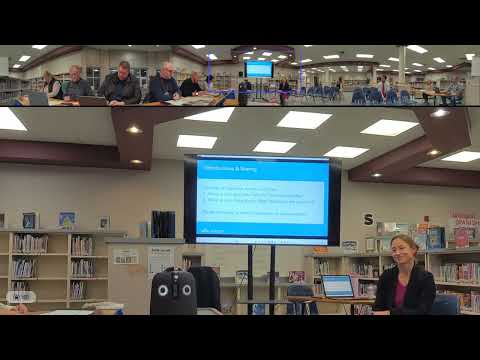
At a Dec. 9 study session, Heather Curl of the Washington State School Directors Association walked West Valley School District board members through WSSDA’s standards and recommended an annual self-assessment, citing research that board alignment with standards correlates with higher student achievement.
Heather Curl, a representative of the Washington State School Directors Association, told members of the West Valley School District Board on Dec. 9 that regular use of WSSDA’s standards and an annual board self-assessment helps boards focus on student learning and governance.
Curl opened a one-hour professional-development session by outlining three recommended steps: “become familiar with and apply the standards to your board work; use WSSDA’s free board self-assessment survey annually to track your progress in relation to them; and supplement individual and team learning through professional development, including taking trainings offered by WSSDA and attending its annual conference,” a board member read aloud during the meeting.
Why it matters: Curl said the standards are grounded in research that links consistent, aligned board practices — respectful meetings, a focus on student data, and clear roles between the board and superintendent — with higher student achievement. She summarized multiple studies and national projects showing that boards reporting effective governance practices tend to be associated with more favorable student outcomes, and she urged West Valley to use the standards as a framework for onboarding and continuous improvement.
What Curl recommended: The presenter outlined five WSSDA standards and accompanying benchmarks, and described a three-part approach that pairs the standards with an annual self-assessment and targeted professional development. “A lot of people call this ‘no surprises’ as a goal,” Curl said, describing the district practice of sharing materials in board packets in advance so members can review and bring informed questions to meetings.
Local context: Board members described West Valley’s strengths — community connectedness, multiple pathways such as career and technical education and college-in-high-school programs, and the district’s innovation center — and said those local practices reflect alignment with the standards. Meeting participants noted West Valley recently received recognition as a “board of distinction,” which presenters cited as evidence of sustained alignment with WSSDA benchmarks.
Discussion highlights: Participants discussed practical governance topics: the difference between policy-setting and operations, the superintendent’s role in executing the board’s strategy, how to conduct site visits without appearing to evaluate staff, and timing of self-assessments for new members. Curl recommended waiting about a year before administering a full self-assessment for newly seated directors so they have time to learn the district.
Next steps: The session closed with a short interactive exercise in which board members posted what they need from the superintendent and from one another (items included consistency, communication, trust, and “grace and understanding” for new members). The study session adjourned at 6:56 p.m. with a brief break and a scheduled return at 7:00 p.m.
The presentation materials and the WSSDA self-assessment were offered as resources for ongoing board development; district staff indicated they will circulate the notes Curl collected from the post-it activity.