OCPS research finds modest math gains from IXL, strong tutor results for Read to Succeed; board presses on fidelity and use
Summary
District researchers told the Orange County School Board that IXL math produced small but statistically significant gains in several courses, Read to Succeed tutoring showed large teacher and tutor support and measured reading gains in some grades, and SuccessMaker helped students who met usage fidelity; board members pressed officials on how programs are used, minutes vs frequency measures, and training needs.
Orange County Public Schools researchers presented a set of recent program evaluations at the board's Dec. 16 work session, telling trustees that digital and tutor-based interventions can help when they're used as intended but that implementation varies widely across classrooms.
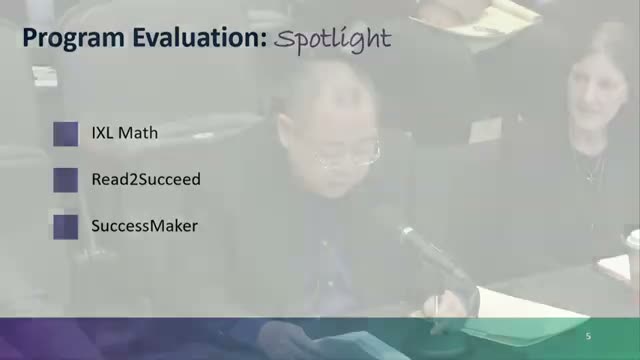
The superintendent's office said the district evaluated three programs in detail this year—IXL Math, Read to Succeed and SuccessMaker—and used a combination of internal and external methods to measure implementation and outcomes. "The IXL maths program is an online learning platform offering over 3,500 adaptive standards based mathematics skills," the research presentation said, and the evaluation focused on how implementation and teacher experience correlated with state assessment results.
On IXL, analysts reported "a small but consistent and statistically significant impact on student mathematics outcomes" for some courses after controlling for prior scores and demographic factors, with gains in grade 6 math, grade 7 math, grade 8 algebra, Algebra I honors and geometry in the evaluated year. The team emphasized that the effect varied by course and by how teachers reported using the product.
The evaluation identified two practical implementation signals. First, teachers with longer experience using IXL (one to five years or more) were associated with higher student outcomes than teachers with under one year of use. Second, teacher-reported frequency mattered: for some courses two to three uses per week correlated with the best results, while for Algebra I and geometry the pattern differed. Researchers told the board that their analysis used teacher-reported frequency and year-long minutes captured in district data rather than a per‑week timestamp. For fidelity the research treated students who logged fewer than 57 minutes over the school year as "not using the program with fidelity."
Read to Succeed, a K–3 tutoring model that pairs students with trained tutors, produced strong satisfaction results: tutors rated training and program supports above 90 percent and nearly all surveyed teachers and coaches reported positive impacts on reading and student confidence. On statewide measures researchers reported statistically significant differences on specific literacy subskills and a 13‑point improvement on a statewide fluency measure for one cohort.
SuccessMaker, the district's K–5 adaptive system for reading and math, met usage targets for roughly 30 percent of K–5 students (the program goal cited was 45 minutes per week). Students who met fidelity showed significant gains across grade bands after controlling for demographics; the research team recommended streamlining district–vendor–school communications and increased translation support for multilingual classrooms where usage patterns were lower.
Board members focused questions on two practical matters: whether the evaluations examined minutes-per-week versus overall minutes in the year and how to translate recommendations into classroom practice. Member Gallo asked directly whether the district would discontinue IXL for honors classes given mixed findings; researchers replied the report does not justify a blanket honors/non‑honors decision because course-level effects differed and the analysis covered a single year of results. The research lead said many questions about optimal weekly minutes remain open and could be addressed in future analyses.
Superintendent Vasquez and research staff said the evaluations led to near-term recommendations: refine IXL skill alignment with state standards, promote best practices (for example using IXL for targeted intervention and homework), provide targeted professional training, and examine links between IXL internal metrics and state scores. For Read to Succeed the recommendation emphasized expanding time or starting earlier in the school year, better volunteer integration, and improved tracking of minutes and outcomes.
The board asked staff to bring back historical recommendations to check whether prior proposals were implemented and whether they produced the expected improvements. Staff agreed to produce follow‑up reports comparing multi‑year results and to include teacher survey items focused specifically on barriers to fidelity.
The work session was informational; the board did not take action on program procurement or adoption during the session.