Get Full Government Meeting Transcripts, Videos, & Alerts Forever!
Get email alerts on the Fee Schedule topic
No spam. Unsubscribe anytime.
Iroquois County panel approves new animal-control fee schedule, forwards intergovernmental agreement pending legal review
Summary
The Iroquois County Health Committee voted to approve a revised animal-control fee schedule and to forward an intergovernmental agreement with the schedule attached to the full county board, pending the state's attorney's review. The changes set new fines and daily boarding costs and remove barking penalties from the county schedule.
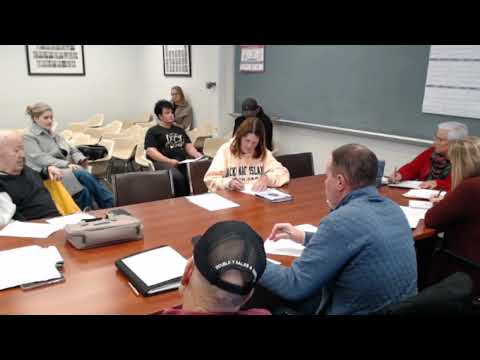
The Iroquois County Health Committee voted to adopt a revised animal-control fee schedule and to forward an intergovernmental agreement (IGA) with the schedule attached to the full county board, pending review by the state's attorney. The committee approved the measure in a roll-call vote with affirmative responses from Munsterman, Hughes, Carr, Grant and Crow.
Committee members said the revisions are intended to align enforcement costs with the department's actual expenses and to clarify which fines must remain tied to Illinois law. "We are going out there and giving you a ticket because your dog has made some money and you didn't find it," a committee member said during the discussion as the group reviewed options for punitive and cost-recovery fines.
Why it matters: The fee schedule determines what municipalities and residents will pay when animal-control responds to bites, quarantines, impoundments and other ordinance violations. Committee members stressed the changes will both cover department costs and provide clearer guidance to villages that sign intergovernmental agreements with the county.
Key details agreed by the committee include: a differentiated fine for failure to confine a biting dog (examples discussed: $50 for a vaccinated dog that is quarantined at home; $200 for an unvaccinated or noncompliant owner whose animal is impounded), a boarding/holding charge of $25 per day, and a graduated series of fines for repeated offenses (committee discussion recorded proposed amounts of $100 for first offense, $150 for second, $200 for third and $500 for fourth and subsequent offenses). The group also discussed disposal and euthanasia fees (examples cited: $50 for cat euthanasia, $75 for dog under 40 pounds, $100 for dog over 40 pounds) and a $25-per-day supplement tied to rabies observation when an animal is confined at the facility.
The committee removed a standalone county-level penalty for barking or howling dogs, noting noise issues are generally handled by municipal ordinances. Members also agreed to reference Illinois statute for fixed public-safety charges (the transcript references the state's $25 public-safety fee and a separate $1.25 circuit-clerk fee).
Next steps: Staff will assemble the edited fee schedule and attach it to the IGA. The committee approved forwarding the IGA and fee schedule to the full county board with approval contingent on the state's attorney's sign-off. "I'll send the intergovernmental agreement with the fee schedule that you just approved, and he can review that and have an answer by Tuesday," a staff member said.
Vote and motion: The committee moved to approve "the fee schedules as discussed" and to forward the IGA pending legal review; the roll-call recorded affirmative votes from Munsterman, Hughes, Carr, Grant and Crow and the motion carried.
What the vote does not do: The committee did not finalize all ordinance-language edits today; several statutory references were left to be confirmed with the state's attorney. Committee members emphasized that where the state statute fixes a fee the county will reference that statute rather than hard-code a number that could change.
The matter will appear on the full county-board agenda after the state's attorney reviews the document.