Get Full Government Meeting Transcripts, Videos, & Alerts Forever!
Lawmakers and witnesses warn cuts to federal programs and staffing have weakened anti‑trafficking capacity
Summary
Members of the subcommittee and witnesses said recent cuts to federal offices and grants have reduced training, specialized staff and technologists in government, undermining enforcement and victim support; witnesses urged restoration of funding and staffing.
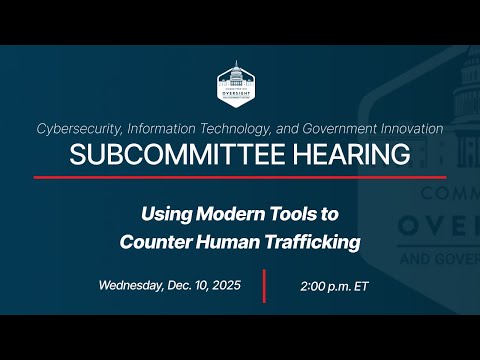
Multiple members of the House Oversight subcommittee warned that reductions in federal programs and staffing have hampered efforts to identify and recover trafficking victims, and witnesses agreed that funding and personnel are essential complements to technological tools.
Representative Shubhrant Ramnam and others cited a list of…
Already have an account? Log in
Subscribe to keep reading
Unlock the rest of this article — and every article on Citizen Portal.
- Unlimited articles
- AI-powered breakdowns of topics, speakers, decisions, and budgets
- Instant alerts when your location has a new meeting
- Follow topics and more locations
- 1,000 AI Insights / month, plus AI Chat