Get Full Government Meeting Transcripts, Videos, & Alerts Forever!
Get email alerts on the Score Act topic
No spam. Unsubscribe anytime.
Rules Committee Approves Closed Rule to Bring SCORE Act to House Floor After Contentious Debate
Summary
The House Rules Committee voted to report a closed rule for HR 43 12, the SCORE Act, after hours of debate over athlete protections, Title IX, antitrust preemption and whether amendments should be allowed on the floor. The committee approved the rule by roll call (7–4).
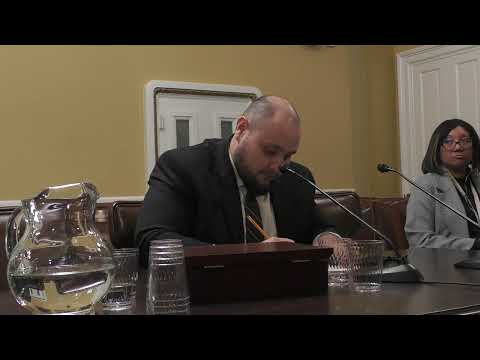
The House Rules Committee on Monday approved a closed rule to bring HR 43 12 — the Student Compensation and Opportunity through Rights and Endorsement Act (SCORE Act) — to the full House after a lengthy and sometimes heated hearing that centered on college athletics, athlete protections and whether members should be permitted to offer floor amendments.
Chairman Griffin moved the rule, which treats the Rules Committee print as adopted and provides one hour of general debate and one motion to recommit. The package also applies closed rules to three K–12 bills on foreign contributions and two small-business measures. After debate and multiple failed attempts to make floor amendments in order, the committee approved the motion to report the rule by recorded vote, 7 yeas to 4 nays.
Supporters, including Chairman Wahlberg of the Education and Workforce Committee, said the SCORE Act is intended to provide national standards to the chaotic patchwork created by recent NIL litigation and inconsistent state laws. Wahlberg told the committee the bill ‘‘establishes a national framework for college athletics, resolves state law disparities, protects student athletes' right to earn compensation through NIL deals with reasonable guardrails in place, and puts an end to the litigation bonanza hovering over college sports.’’
Opponents, led by Democratic members such as Rep. Suzanne Bonamici and Rep. Frank Pallone, said the bill would strip athletes of labor protections, preempt state laws that protect athletes' safety and deny meaningful Title IX enforcement. ‘‘The SCORE Act is promoted as a measure to empower college athletes, when in reality, it is a series of blank checks and bailouts for the NCAA and its powerful conferences,’’ Rep. Bonamici said during her testimony.
Members repeatedly clashed over several elements: whether the bill’s preemption language would nullify state safety measures (members cited Maryland’s Jordan McNair Safe and Fair Play Act), how much control NIL collectives and schools would have over a revenue-sharing pool, and whether the bill’s antitrust exemption grants the NCAA excessive authority. Sponsors pointed to provisions they described as narrowly tailored and said the bill contains enforcement pathways — including private rights of action and state attorney general authority — while critics said those paths were inadequate.
Lawmakers also debated specific technical provisions. Sponsors described a revenue-sharing ‘‘pool’’ provision (discussed in committee testimony as a floor of roughly 22% of institutional revenue for distribution to athletes at some schools) and a cap on agent fees discussed as 5% in testimony, while opponents said the bill does not create meaningful remedial mechanisms for athletes who lose roster spots or suffer long-term injuries. Witnesses noted the bill’s post-eligibility medical coverage is limited to three years after graduation, a point Democratic members said left injured athletes exposed.
Republicans and some Democrats urged floor debate on a set of member amendments intended to cap coaches’ pay, require additional data collection, and strengthen Title IX protections. Rep. Jim McGovern moved to make five amendments in order that had been offered by Rep. Baumgartner; the motion failed in a recorded vote (reported as 4 yeas, 7 nays). Several other Democratic amendments also failed to be made in order.
The Rules Committee’s vote to report the closed rule clears the way for the bill and the other measures to be considered on the House floor under the terms the committee approved. The committee’s action means members who sought to add the Baumgartner and Trahan amendments will have to pursue those changes on the floor if they can secure support, or pursue them through separate future efforts.
The rule took effect when the Rules Committee reported the package by roll call. The full House schedule will determine when each bill is called for debate and votes.
What’s next: The SCORE Act is expected to reach the House floor under the closed rule approved by the Rules Committee. Members who said they oppose the bill indicated they will press for amendments on the floor or seek further changes in subsequent legislation.