State Water Resources Control Board staff outline broad rewrite of underground storage tank rules with 2026 effective date
Loading...
Summary
Board staff presented a comprehensive rewrite of Title 23 UST regulations proposing new definitions, mandatory recordkeeping, stricter monitoring and testing, a phase-out of single-wall systems, faster reporting deadlines, and a 365‑day limit for permanent closure; guidance and updated forms will be issued before the rules take effect.
State Water Resources Control Board staff presented a proposed, comprehensive rewrite of underground storage tank (UST) regulations contained in Title 23 of the California Code of Regulations, describing new definitions, inspection and monitoring requirements, tightened reporting deadlines and administrative changes intended to better protect groundwater.
The presenter said the regulations "sẽ có hiệu lực vào ngày một tháng một năm hai nghìn lẻ hai mươi sáu" (are scheduled to take effect Jan. 1, 2026) and that guidance and updated forms will be available before that date. The rewrite would create three installation-based UST types with separate requirements, add a new classification for "abandoned" tanks, and require that abandoned tanks remain subject to annual inspection and, if returned to service, be upgraded to a type‑three configuration and pass enhanced leak‑detection testing.
Why it matters: the package tightens operational and enforcement standards the presenter said are intended to reduce undetected releases and speed remediation. Key changes described include a new three-tier violation classification to calibrate enforcement responses; required on‑site and off‑site record retention with a 36‑hour production window for off‑site records; and a requirement that manufacturers provide evidence the interstice (the space between tank layers) is continuous before installation.
Monitoring and testing: the proposal phases in continuous electronic leak detection in containment areas previously monitored by mechanical floats, requires interstitial monitoring capable of stopping product flow at unmanned facilities with pressurized piping, and orders more frequent calibration and maintenance. Advanced leak‑detection test results would be due within 30 days (reduced from 60) and testing equipment must be calibrated per manufacturer instructions or, if none exist, National Institute of Standards and Technology (NIST) guidance.
Inspections, staffing and certification: the draft establishes an independent compliance‑inspector role that must hold current International Code Council (ICC) UST inspection certification and renew by examination every 24 months; unified program agencies may accept program‑equivalent criteria for their staff. The operator‑identification form will be replaced by discrete data fields in the searchable reporting system and the designated operator must be identifiable against ICC certification records.
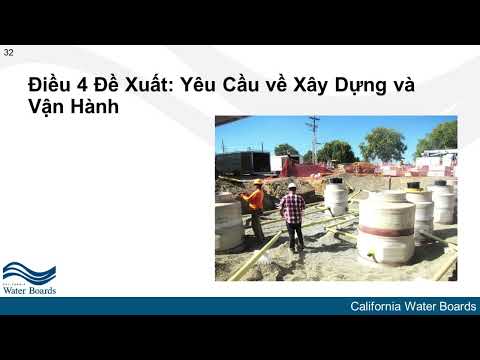
Construction and equipment: proposed construction standards include compulsory manufacturer‑specified manway access, new manufacturer plate/labeling requirements (manufacturer ID, production date, burial depth, max test pressure and exceptions), and anchoring requirements for tanks installed after specified dates. The presenter also proposed minimum material standards for steel piping, and constraints on reusing single‑wall or temporary tanks without formal permanent‑closure and re‑certification steps.
Leak reporting and response: the draft renames the initial incident notice a "preliminary report" and requires it to include facility ID and address. Unified program agencies may direct removal of remaining product where necessary; all materials from that preliminary report are to be transferred to the local pollution oversight agency within 60 days for determination of scope and that agency is expected to review documentation within 30 days. The proposal also adds a 45‑day deadline for submitting a product‑removal report when material has been removed to mitigate immediate risk.
Closure and sampling: temporary out‑of‑service status requires unified program agency approval and a 90‑day periodic inspection cadence; permanent closure procedures must be completed within 365 days of decommissioning, with soil samples taken immediately after tank or piping removal and groundwater samples taken when water is present. Closure reports would be due within 30 days and must include site maps, sample logs and laboratory analyses as specified in the proposed appendices.
Forms and systems: GeoTracker will be the portal for pollution oversight submittals and will prepopulate fields when a site ID is entered. Many appendices and inspection forms are revised to require next‑due dates for routine checks, alarm log histories, continuity verification steps and expanded pages for complex sites.
Limitations and context: the transcript did not include a date for the presentation. The presenter repeatedly stated the changes aim to align enforcement and technical standards across unified program agencies and the State Water Board and to ensure state groundwater protections are "equivalent" to UST regulatory performance.
Next steps: staff indicated the package was presented to the Board on Sept. 3 for approval and was under Office of Administrative Law review; formal effective dates, final guidance documents and form packages will be released prior to the regulation effective date, and staff invited questions and provided a QR code and link to the proposed decision and supporting materials.