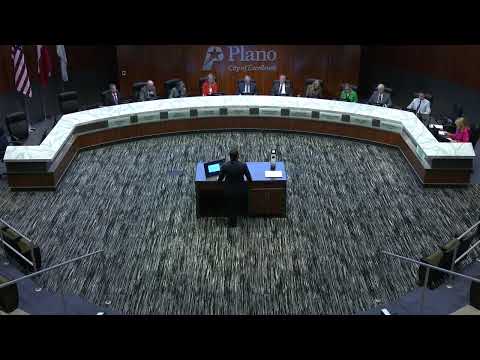
Plano council names Collin County Connects committee, residents press for more transparent transit process

Plano City Council · November 25, 2025

Loading...

AI-Generated Content: All content on this page was generated by AI to highlight key points from the meeting. For complete details and context, we recommend watching the full video. so we can fix them.

Summary

Plano approved appointments to a new Collin County Connects committee charged with reviewing alternative transit options; residents urged wider public engagement and raised alarms that a recent proposal could eliminate local bus service and divert sales tax revenue.

The Plano City Council on Nov. 25 voted unanimously to appoint 13 members to a new Collin County Connects advisory committee meant to evaluate alternative transit options and recommend a continuity-of-service plan.

Andrew Fortune, director of policy and government relations, briefed the council on goals for the committee—continuity of service, community input, connectivity, a prioritized schedule, modernization and an education plan—and said staff had received nearly 100 applications. The council approved Phil Dyer as committee chair and a slate of nominees representing disability, seniors, downtown businesses, transit riders and other categories; the motion passed 8–0.

During public comment, transit advocates and riders called for broader public engagement. Amber Chaffin of Keep DART in Plano said the city’s recent proposal submitted to Dallas Area Rapid Transit appeared to eliminate local bus and microtransit routes before public input and questioned who the city was consulting. "Micro transit may have a role, but it can't replace the system without community input," she said, urging a joint town hall with DART.

Other speakers, including Warren Pena, cautioned that the committee’s timeline felt rushed—the committee is expected to begin work in December with a report to the council later that month and a potential phased launch after the election. Pena said a February or March launch on a compressed timeline and modest budget "doesn't feel achievable." He urged regional coordination among DART-member cities and broader state-level planning.

Council members who supported the appointments said the committee structure was designed to reflect wide representation and that staff liaisons would provide technical resources. The council clearly separated the committee’s advisory role from formal action, describing it as a vehicle to review vendor options and prioritize elements such as cost, safety and equity.

What’s next: The appointees will receive an information packet and a survey of priorities; staff said members will be asked to review vendors and return recommendations by the council’s December meeting, with alternate scheduling if the committee requests more time.