Get Full Government Meeting Transcripts, Videos, & Alerts Forever!
Get email alerts on the Southwest Auar topic
No spam. Unsubscribe anytime.
Residents tell Lakeville council AUAR omits key wetlands and habitats
Summary
Residents urged Lakeville City Council to pull the Southwest Study Area AUAR from consent, saying it omits the Solberg Waterfowl Production Area and understates wetland and watershed connections; they also asked the city to consult federal wildlife authorities and adopt seasonal work windows to protect species.
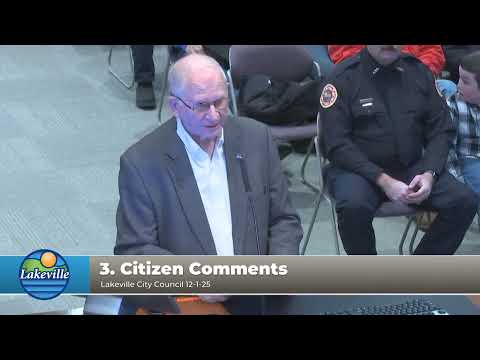
At the start of the Dec. 1 meeting, residents urged the Lakeville City Council to reconsider placing the final order for the Southwest Study Area Alternative Urban Area Review (AUAR) on the consent agenda. Beth Lowden, a resident who said she met with the planning commission in August, complained that the AUAR cites 390.3 acres tied to a developer who does not yet own that amount and recommended the city clarify outreach to federal wildlife authorities.
"I would hope that Tina and her team can answer these questions," Lowden said, urging the council to ensure United States Fish and Wildlife Service was consulted. She asked the council to address traffic impacts on County Road 70, to include wetlands that drain west into the Credit River as well as those in the Vermillion system, and to respect seasonal restrictions for land disturbance and tree work outlined in the report.
Another resident, Bob Erickson, told the council the AUAR failed to identify the Solberg Waterfowl Production Area and omits a mapped 114-acre natural resource the community has used since 1994. "The AUAR does not identify Solberg Waterfowl Production Area," Erickson said, and noted the DNR has identified Blanding's turtles and the rusty-patched bumblebee in the area. Erickson added that wetland delineation remains in progress and expressed frustration that the document indicated no citizen comments during the review window.
Why it matters: Residents say the omissions could affect habitat protections, the scope and timing of construction, and required agency review. Council members did not debate the AUAR at length during the meeting; the AUAR item remained on the consent agenda and citizens requested the document and comments be entered into the official record.
What happens next: Citizens asked staff to provide clarifications and for the AUAR record to include earlier public input. The item was presented on the consent agenda; any formal changes to the AUAR, wetlands delineation, or additional agency consultation would be reflected in future staff reports or separate council action.