Get Full Government Meeting Transcripts, Videos, & Alerts Forever!
Get email alerts on the Land Use topic
No spam. Unsubscribe anytime.
Arlington staff present decennial critical‑areas update using WDFW guidance; city to require site-specific tree-height reports
Summary
Staff presented a decennial update to the critical‑areas ordinance relying on Washington Department of Fish and Wildlife best-available science; wetlands buffers remain unchanged while new procedures, stronger language on hazards and a site-potential tree-height method for stream buffers were highlighted.
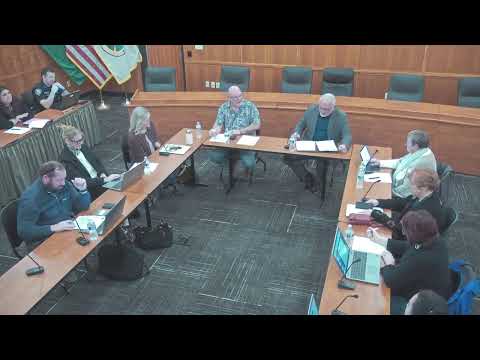
Amy presented the city’s required 10-year critical‑areas ordinance update, saying staff wrote the update internally while relying on Washington Department of Fish and Wildlife best-available science. She said wetlands buffers in the city did not change from the prior code, but staff strengthened language for geologic hazards, critical aquifer recharge areas, frequently flooded areas and cultural resources.
The most significant change staff described was to fish and wildlife habitat conservation-area review procedures and the buffer-calculation method. Amy explained the ordinance adopts a 'site-potential tree height' approach to determine buffer widths; she described the WDFW web tool staff used to estimate 200‑year heights and gave examples that could range from about 100 feet to as high as roughly 250–266 feet depending on species and site conditions. Amy emphasized the requirement that applicants perform on-site critical-areas reports and noted the city will use third‑party reviewers paid by developers if the best-available science on a site is challenged.
She told council that most of the mapped stream corridors are in largely developed areas and that impacts to infill or small-lot development should be limited in many neighborhoods, while a small number of parcels (for example, areas near 204th and Amber Grove) may need special process handling. Councilmembers asked about species-specific outcomes, clearing trees and reasonable-use determinations; Amy said reasonable-use provisions, exemptions, exceptions and variances remain in the code and that developer-paid third-party review will address disputes.
What’s next: staff said they will bring a final ordinance for formal consideration after incorporating feedback and ensuring the city’s maps and third-party review process are clearly documented.