Get Full Government Meeting Transcripts, Videos, & Alerts Forever!
Get email alerts on the Transportation Safety topic
No spam. Unsubscribe anytime.
Gaithersburg reviews 'Move Safe' plan after rise in severe crashes; council discusses 50% reduction target
Summary
At a Nov. 24 work session the Gaithersburg mayor and council heard consultants from Kimley Horn present the Move Safe safety action plan, including five‑year crash analysis showing 17 severe collisions in 2024, outreach results and a timeline for a spring 2026 plan. Councilors debated adopting Vision Zero messaging versus the grant‑driven 50% reduction target.
The mayor and City Council of Gaithersburg on Nov. 24 heard a presentation from consultants developing Move Safe, the city’s safety action plan, that laid out crash trends, equity‑focused mapping and public engagement ahead of a final plan targeted for spring 2026.
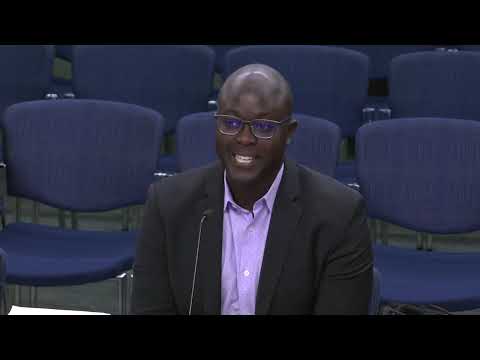
David Samba, project manager for Kimley Horn, told the council that the plan is funded through the federal Safe Streets and Roads for All (SS4A) grant program created by the 2021 Bipartisan Infrastructure Law, and that Gaithersburg combined a $360,000 federal award with a $90,000 local match to produce a $450,000 planning project. "It funds planning and implementation of projects, policies, and programs specifically geared to reduce or eliminate roadway fatalities and serious injuries," Samba said.
Why it matters: the SS4A program requires a certified safety action plan before jurisdictions can access larger implementation dollars. Samba said the plan’s primary metric will be fatal and incapacitating injury collisions (K/A), and that a certified plan is the gateway to seeking construction and program funds.
Key findings and goals
Samba summarized five years of collision data (2019–2024). He reported roughly 5,803 total collisions in that period and 79 K/A collisions overall. After a pandemic dip in total collisions, severe collisions declined from 18 to 10 in 2022 but rose again to 17 in 2024. Based on those trends and simple growth assumptions, the consultant team presented a city goal — consistent with the grant application — to reduce fatalities and severe injuries by 50% over the first five years following plan completion.
"The goal was to reduce city, county, and state road fatalities and serious injuries by at least 50 percent over the first five years after the study is completed," Samba said, adding that interstate facilities such as I‑270 were excluded from the local target because the city lacks full maintenance and implementation authority on those roads.
Analysis approach and priorities
The team described a layered analysis: a "high‑energy" network built from past collision concentrations and a "high‑risk" network derived from exposure and roadway attributes. Excluding interstate segments, the consultants said the high‑energy network represented about 73% of total collisions and 84% of severe collisions while accounting for roughly 17% of roadway miles — a concentration that helps prioritize corridors and intersections for countermeasures.
Samba highlighted disproportionate contributors to severe crashes: impaired users (8% of collisions but 15% of severe collisions), single‑vehicle crashes (15% of collisions but 43% of severe collisions) and pedestrian/bicyclist collisions (6% of collisions but 44% of severe collisions). He also flagged signalized intersections and left‑turn conflicts as systemwide priorities.
Engagement and equity
The consultant discussed ongoing public outreach: a project website, an online survey and an interactive comment map. Samba said that as of Nov. 7 there were 196 survey responses and 199 map comments, and that the survey remained open (he noted it had risen to about 260 by the time he checked during the meeting). He reported 505 in‑person outreach interactions at pop‑up events (30–45 seconds each), and that 83% of those interactions were conducted in Spanish; the team distributed 123 fact sheets and 407 postcards.
Samba said the team overlaid crash locations with demographic indicators (race, age, income, vehicle access, English proficiency) and saw concentrations of severe crashes in areas with higher concentrations of vulnerable populations, which will inform equity‑focused prioritization.
Council discussion and policy tradeoffs
Councilors asked questions about the realism of the 50% target and alternative messaging. The mayor asked whether halving a relatively small annual count (about 17 severe crashes in the most recent year) was achievable; Samba said the plan adopts a "safe systems" approach that combines infrastructure, vehicle, policy and education interventions and pointed to U.S. communities that have achieved similar reductions.
Councilmember Rob urged aligning the city’s messaging with county and state Vision Zero campaigns for stronger aspirational framing: "Why don't we align city policies with the county and with the state with respect to both messaging?" he said. Councilmember Brian replied that a 50% target had been chosen as a bold but realistic commitment when the city applied for grant funding, given jurisdictional limits on state and county roads.
Other topics
Councilors discussed outreach to renters and multifamily communities, the use of QR codes for engagement, and data gaps for micromobility: Samba acknowledged that scooter and bicycle incidents are often underreported in formal crash databases and suggested combining survey and map responses with emerging big‑data tools to better capture micromobility exposure. On autonomous vehicles, Samba said AV deployment may improve safety in the long run but that mixed fleets of automated and human drivers present uncertain interactions; he recommended including guidance and possible pilots in the plan.
Next steps
Samba listed early actions for the council’s consideration — development of road safety audit guidelines, complete‑streets guidance and a public education framework — and a near‑term timeline: ideation through December, drafting Jan–Mar and a spring 2026 final plan with follow‑up community review. The consultant said prioritized corridors (about 20 corridors/intersections) will be selected using community feedback, estimated cost, expected crash reduction and implementation time.
The council offered feedback and committed to continuing the public engagement. The mayor closed the session, announced the next regular meeting for Dec. 1 and adjourned the work session.
Ending note: No formal votes or motions were taken during the work session; the presentation advances the Move Safe plan toward a draft to be returned to council and the public for review in early 2026.