VOTEC project design and bids presented to Bethlehem Area School District; administration says estimate remains under $25 million MOU
Summary
District project team presented final designs and bid strategy for VOTEC capital improvements, including welding, aviation, health careers and culinary labs; presenters said the scope and alternates keep the project within the $25,000,000 memorandum of understanding while preserving options to scale back if bids exceed estimates.
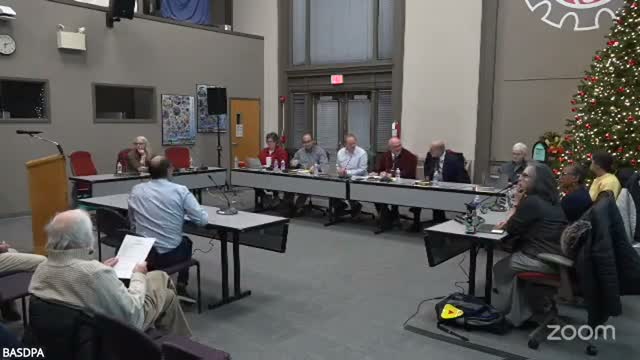
Bethlehem Area School District officials heard a detailed presentation on proposed capital improvements at the VOTEC campus that would convert warehouse space to vocational labs, add health-care and culinary facilities, and create aviation and welding training areas.
Presenters told the board that the approved memorandum of understanding allows for a $25,000,000 project and that the current design and alternates keep the cost under that ceiling. "The artist of agreement were approved and allowed us to go to a $25,000,000 project on this," a presenter said, adding that the set of alternates and contingencies would let the district prioritize work if bids come in higher.
The plan includes conversion of west warehouse space into a welding lab, repurposing rooms for vet tech and electronics-to-health-care conversions at the main building, creation of a secure double-door vestibule at the entrance, and site work to separate bus and student parking. Alternates discussed included second-floor mezzanines for future expansion, a canopy between buildings, exterior roof access improvements, and paving repairs behind the main building.
Presenters quantified the scope and contingencies: a concept budget of roughly $13.03 million had been previously used; current line-item estimates presented included Columbia Street site work (~$10.3 million), main building interior renovations (~$900,000), site work (~$1,000,000), and two contingencies approaching $900,000, producing cumulative estimates around $13.02–$13.08 million before alternates. With alternates and contingencies included, presenters said totals could approach $15,000,000 for construction; including property and related costs, the combined figure comes to about $23,000,000. The district holds a $4,000,000 capital reserve that can be used to offset costs as needed.
Board members asked detailed questions about aircraft size for the aviation program, the timing of courses and student seats, and whether parking and trees would be impacted by the site work. A presenter said aviation and welding will require more time to open than other programs: some programs are slated to start in the next academic year while welding and aviation would come online later. On aircraft donations, the presenter said the district is not buying aircraft but is designing space to accept donated small aircraft for hands-on training.
Administration said bidding is in process, with the intention to return for a contract award in December (possibly via a special meeting before Christmas) and to begin on-site work in January. The board was shown a procurement strategy that includes alternates and multiple contract packages to preserve flexibility and competitive pricing.
The board did not take formal action on the project at this meeting; staff said they would return with bid tabulations and a recommended award date.