Get Full Government Meeting Transcripts, Videos, & Alerts Forever!
Get email alerts on the Historic Preservation Ordnance topic
No spam. Unsubscribe anytime.
Punta Gorda officials explain ordinance that would let building staff issue 'substantial damage' letters for historic homes
Summary
At a Dec. 17 HPAB meeting, city staff explained a new ordinance that would allow a building‑department official to issue 'substantial damage' letters to owners of historic homes, a step staff said could enable access to certain flood‑mitigation grants while leaving certificate‑of‑appropriateness and planning processes unchanged.
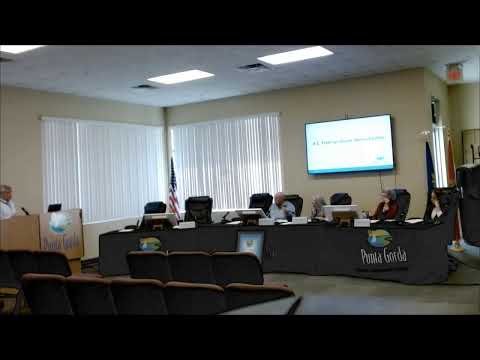
At its Dec. 17 meeting, the Punta Gorda Historic Preservation Advisory Board discussed a city ordinance that would allow a building‑department official to issue "substantial damage" letters to owners of historic homes, an action staff said could unlock federal or state flood‑mitigation funding for structural flood compliance.
The board member who raised the issue said the ordinance "dropped out of the sky" and asked for clarification on process and oversight before the measure went to the City Council. The board member added they wanted "an honest, transparent conversation" about how the ordinance would affect the board's advisory role.
A building‑department representative responded that the ordinance does not change planning, zoning or the historic‑society review process. The representative said, "Historic structures are exempt in the Florida building code from substantial damage determinations," and explained that the letter and associated funding route are voluntary: owners would opt to receive the letter and then must meet flood‑compliance requirements — for example, raising a house — to retain historic value while qualifying for certain grants such as increased‑cost‑of‑compliance (ICC) funds.
The representative told the board the provision was designed so the building official could document eligibility for flood‑mitigation programs while preserving a home's historic designation when possible. He said the ordinance "came from planning and zoning" and also went through the city's legal review before being presented to council.
Board members voiced process concerns, saying they expected to review items affecting HPAB before the ordinance's first council reading. One member noted the ordinance appeared on the council's agenda on short notice. Staff acknowledged the timing and offered to involve the board earlier in future legislative items that affect its advisory responsibilities.
Board members also emphasized owner protections and caveats. The building‑department representative said the ordinance would not apply if an engineer determined a structure could not feasibly be raised or if work would eliminate the property's historic value.
The ordinance discussion did not include a formal HPAB vote; the board confined its action at the meeting to asking staff for clarifications and expressed an intent to follow up at upcoming meetings and in the joint session with council.
Next steps: the board requested clearer notice and staff follow‑up; the transcript shows the ordinance had already reached City Council for consideration around the same timeframe, and board members said they would seek additional process protections and review language in advance of further council action.